
What Colours Are Off Limits for Wedding Guests?

White is off limits for wedding guests, and everything that photographs as white goes with it. Ivory, cream, champagne and pale blush all read as bridal in photos, even when they look clearly different from white in the shop. If you have to ask whether a shade is too close to white, it is.
Can I wear black to a wedding?
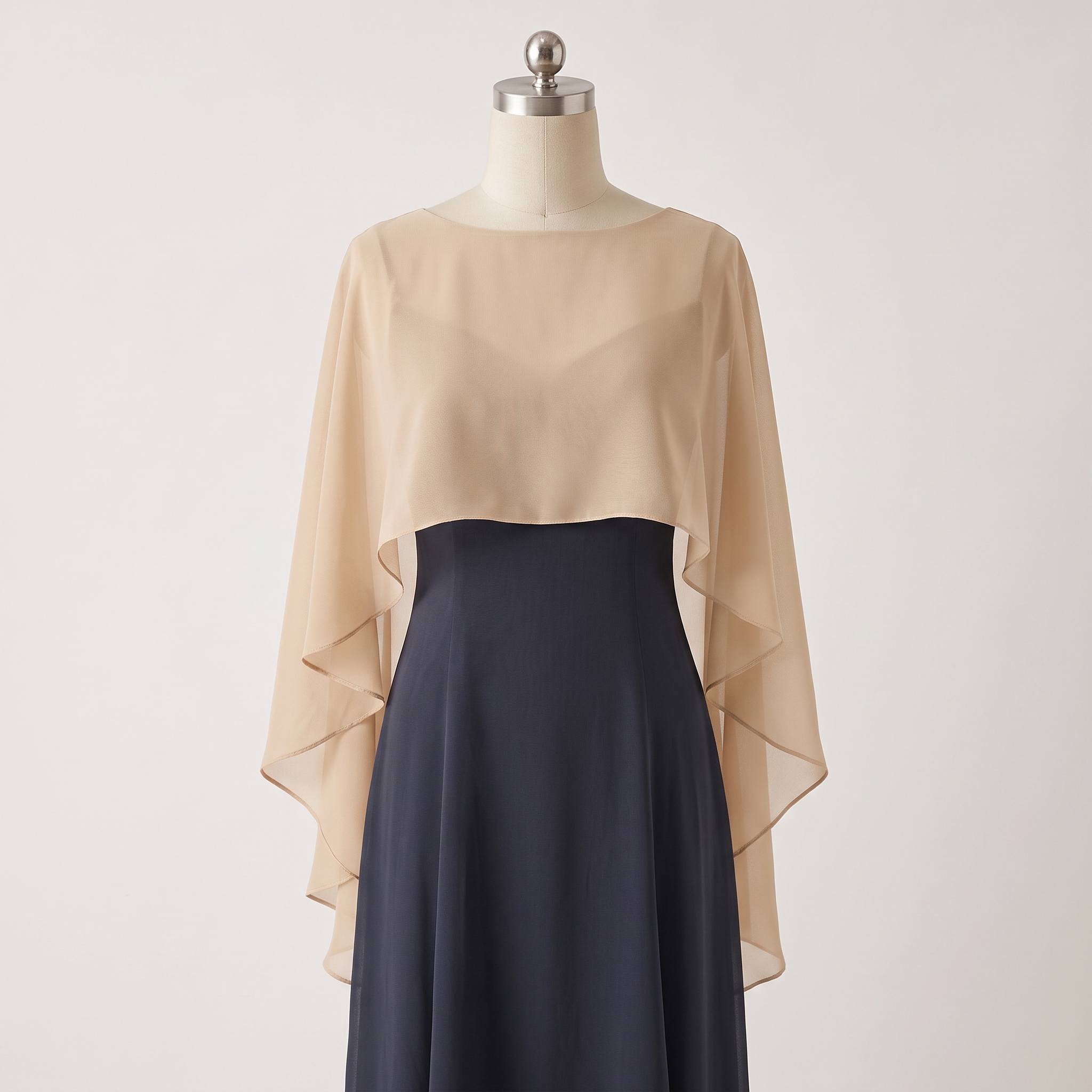
Yes, in most cases. Black is a normal, safe choice for an evening or formal wedding, and it has been for years. Two exceptions: some couples still ask guests not to wear black, and at traditional Chinese and Indian ceremonies black carries mourning associations, so it is worth checking before going head-to-toe black. A black dress with a coloured wrap or accessory sidesteps both problems — our plain chiffon wedding wrap in champagne or another colour over a black dress keeps the outfit clearly guest, not mourner, at $38.
Can I wear beige to a wedding?
Beige is the colour that catches people out. On its own, a beige or nude dress can photograph as white, especially in bright light. It is fine as an accent — a beige shoe, a beige bag — but a full beige dress is a risk unless you know the couple will not mind. The same applies to light grey and very pale gold. If the dress is beige, pair it with a strong colour over it so the overall read is unmistakably not bridal.
Can I wear red to a wedding?
In Western weddings, yes — red is a normal guest colour, though a head-to-toe bright red dress draws the eye, and some guests prefer a deeper shade like burgundy for that reason. At traditional Chinese and Indian weddings, red is the bride’s colour, so guests avoid it there. The rule is not about the colour itself; it is about whose colour it is at that particular wedding.
What about the wedding party’s colours?
If you know the bridesmaids are wearing sage, do not wear sage. Matching the wedding party looks like you are part of it, and it photographs that way too. The same goes for the couple’s stated palette: if the invitation asks guests to wear a set of colours, that request outranks every general rule here. Check the invitation again the week of the wedding — couples do change the palette, and guests have been caught out by a late change.
The same colour, different wedding
A colour that is fine at one wedding can be a problem at another, because the light and the formality change how it reads. At a daytime church wedding or an outdoor ceremony, bright sun washes pale shades out — this is where pale blush and champagne catch guests out, since the camera pushes them toward white even when they look clearly pink or gold in the mirror. A dress in a definite mid-tone holds its colour in daylight; a very pale one often does not. An evening wedding is more forgiving of pale shades, because the light is lower and colours read deeper, but it is stricter about black-tie expectations — a casual pastel that suits a garden ceremony can look underdressed in a ballroom. At a beach or garden wedding, soft pastels and light colours are normal, but the white rule does not relax: sand and sun make near-white shades photograph even closer to white. And at a traditional ceremony, the couple’s own customs outrank every general rule here — red for the bride at Chinese and Indian weddings, mourning associations for black — so the invitation and a quick check with the couple matter more than any list. For an autumn date, the light and the dress code both shift again — see what to wear to a wedding in October.
Near-white, shade by shade
White itself is the only outright ban, but several shades sit close enough to it to cause the same problem in photos. Ivory is the closest — it is white with a warm tint, and in wedding photos it reads as the bride’s colour, not a guest’s. Cream is the same risk in a cooler tone. Champagne looks gold in the shop and photographs as a pale, almost-white shimmer in bright light, which is why it is safe as a wrap or accessory over a dark dress but risky as a full dress on its own. Pale blush looks pink indoors and washes toward white outdoors, especially in sun. Off-white and linen-white are white by another name and should be treated as white. Light beige, nude, very pale gold and light grey belong in the same group: fine as a shoe, a bag, or a layer over a strong colour, but a full dress in any of them can photograph as bridal. If you love pale colours, pick one with an unmistakable tint — a dusty blue or a lilac that no camera could mistake for white — and keep the rest of the outfit plain so the colour reads clearly.
What colours are always safe?
Jewel tones — emerald, burgundy, navy, deep sapphire — work at almost every wedding, day or evening. Soft pastels work for daytime and outdoor weddings. And if you are ever unsure, a dark, plain dress with one coloured layer over it is the safest outfit in the room. For the rest of the guest rules, see what not to wear as a wedding guest.
[…] it into your bag after. Strict venue: go opaque. Cold evening: bring a coat too. If you are still choosing a wrap colour, check which colours are off limits for wedding guests […]
[…] Winter weddings suit deeper colours — navy, burgundy, emerald, charcoal — and they photograph well in low winter light. Pale colours are not banned, but a pale dress in a dim church can photograph washed out, so if you wear one, add a darker or stronger layer over it. The colour rules that apply all year still apply: do not wear white, do not match the wedding party, and check the invitation for a stated palette. The full list is in what colours are off limits for wedding guests. […]
[…] at the door, and let the wrap or bolero carry the outfit indoors. If the event is a wedding, check which colours are off limits for wedding guests […]