
What to Wear Under a White or Pale Dress So Nothing Shows Through

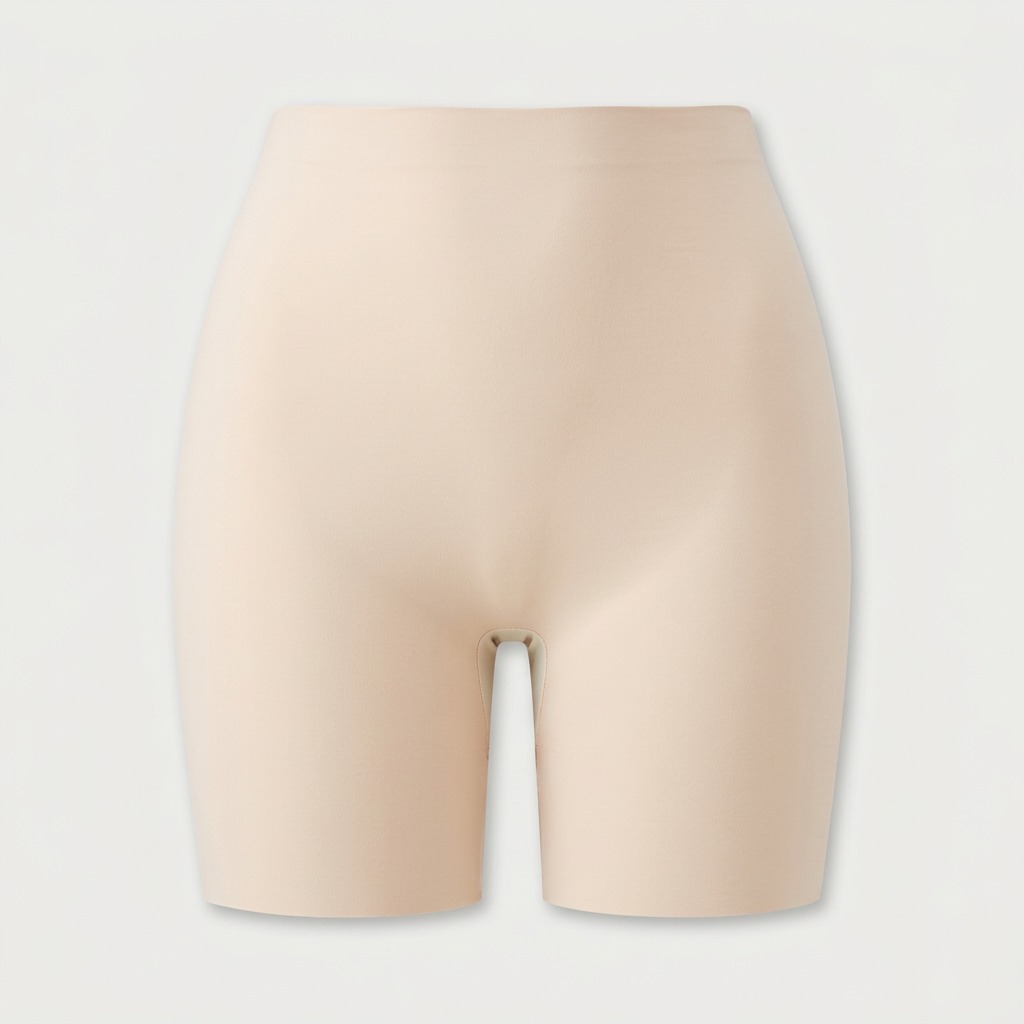
Wear a layer close to your skin tone, with no seams and no texture, and check it in daylight before you leave. That is the whole answer in one sentence. The rest of this post is about getting each part of it right, because white and pale dresses are unforgiving: they show colour, seams and edges that a darker dress would hide completely.
Why does white underwear show more under a white dress?
It seems backwards, but white underwear under a white dress usually shows more than a skin-tone layer does. The reason is contrast against your skin, not against the dress. A white bra or white shorts create a bright block where your skin is not white, and that block reads straight through thin fabric — especially in sunlight or in a flash photograph, where the fabric goes more transparent than it looked indoors.
A layer close to your skin tone does the opposite. It blends with the skin behind the fabric, so there is no hard edge for the eye to catch. “Nude” is not one colour, though. It is a range, from pale beige to deep brown, and the right one is the one closest to your own skin. A beige layer on very pale skin, or a light layer on deep skin, will still show as a line. Hold the layer against your forearm in daylight and compare — that is a better test than the name on the packet.
Black under a white dress is the worst choice of all, for the same reason in reverse: a dark block under pale fabric is visible from across the room. Save black layers for dark dresses.
What colour should the layer be?
Start with your skin tone and work from there. If your skin is fair, a pale beige or light nude is the starting point. If your skin is medium, a tan or caramel nude works better. If your skin is deep, a rich brown nude is the match. The test is always the same: put the dress on over the layer, stand in daylight — by a window, not under a bedroom lamp — and look at the front, the back and the sides. If you can see where the layer ends, it is the wrong shade or the wrong cut.
One more colour note: a white layer is not useless, but it behaves differently. A white slip under a white dress can create a visible line where the slip ends and bare skin begins, because the slip is brighter than the skin below it. If you wear a white layer, make sure it ends where the dress ends, or where it will not be seen — a full-length slip under a long dress, for example, rather than a short slip under a knee-length one.
What about the skirt: slip shorts or shaping shorts?
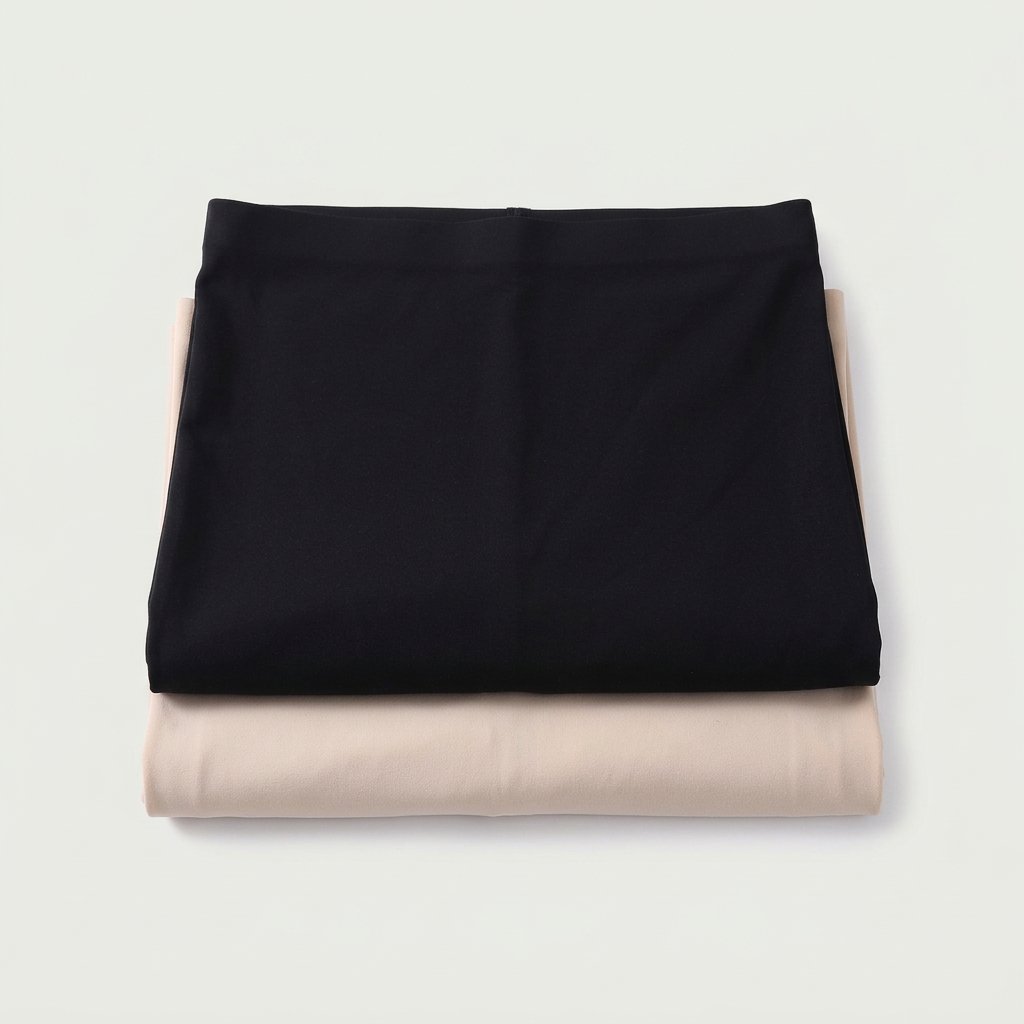
For the lower half, the choice depends on what problem you are solving. If the problem is show-through and visible lines, seamless slip shorts are the answer. Our slip shorts are $28, seamless, high-waist, and sit under a dress without a visible edge. The beige pair is the one for a white or pale dress; the black pair is for dark dresses. They also stop thigh rub, which is a separate comfort question answered in how do I stop my thighs rubbing together when I wear a dress.
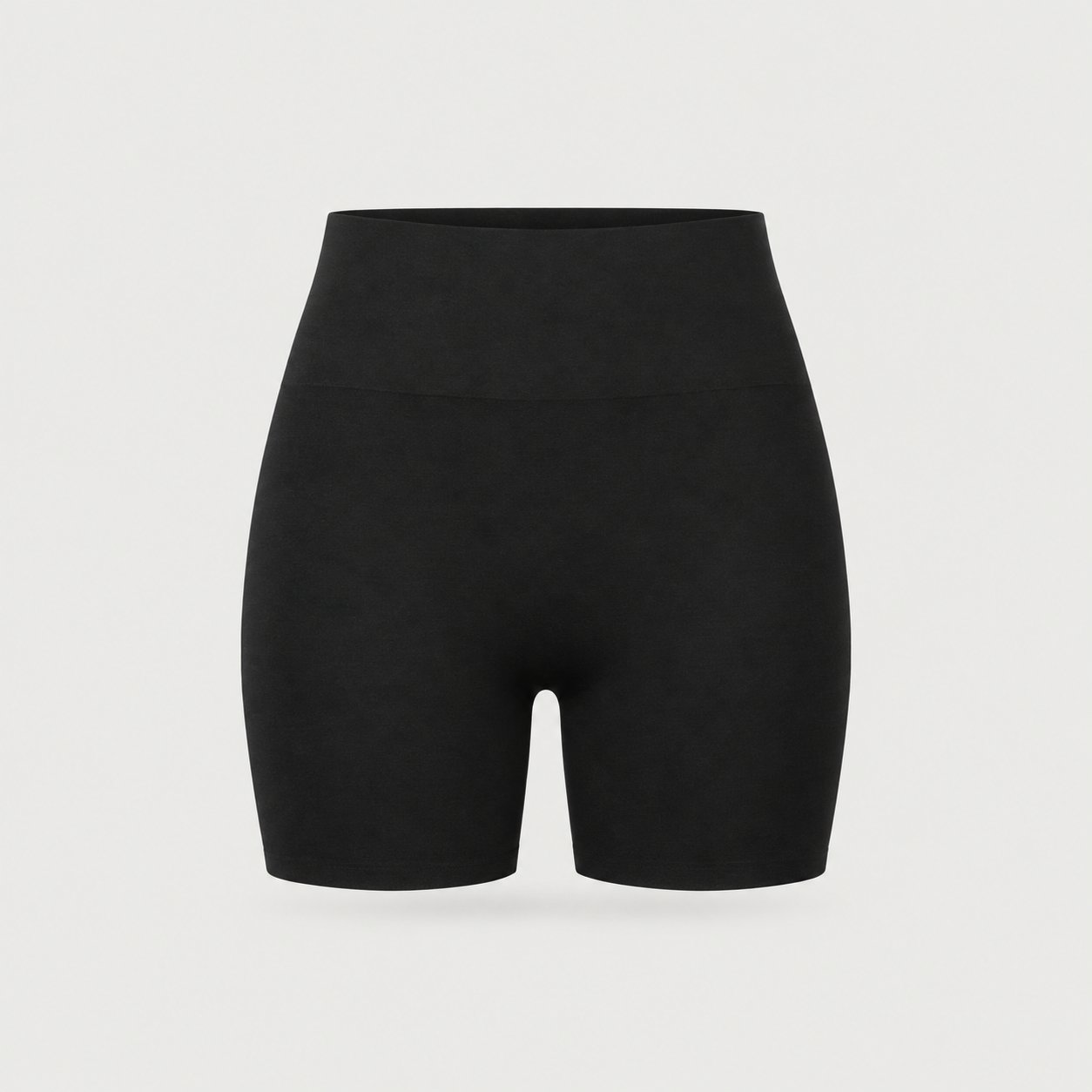
If the problem is smoothing and hold under a fitted dress, shaping shorts are the other option. Our tummy-control shaping shorts are $26, in skin and black, with firm control from a cotton and elastane knit. Be honest about the trade-off here: they are not seamless — the product page says so plainly — so under a very thin white dress they may show an edge where slip shorts would not. They are the right choice when the dress is fitted and you want hold; they are not the right choice when invisibility is the only job. Pick the one that matches the dress in front of you, not the one that sounds more impressive.
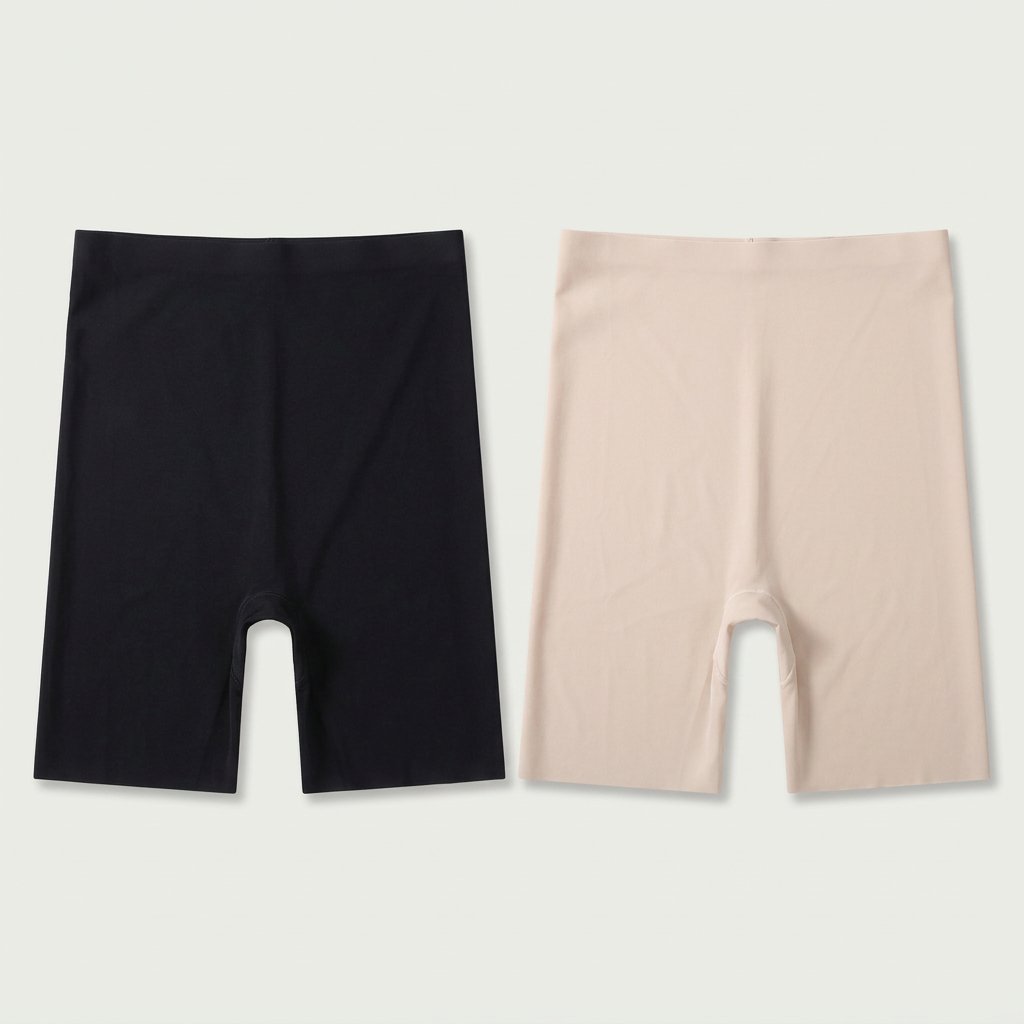
For a dress that is sheer all over, neither short on its own is enough. A sheer skirt needs a slip or an opaque layer that covers the full length of the skirt, not just the top of the thigh. Shorts solve the underwear-line and show-through problem at the hip and thigh; they do not make a transparent skirt opaque. If you can see your legs clearly through the skirt fabric, add a slip before you worry about which shorts to wear.
What about the top half?
The same rules apply above the waist: match your skin tone, avoid lace and texture, and keep straps out of sight. A smooth, seamless bra in a skin tone is the starting point for a thin or pale bodice. Lace, embroidery and raised seams all read through thin fabric, even when the colour is right. If the dress has a low neckline as well as thin fabric, that is a second problem — coverage, not just invisibility — and a lace modesty panel ($18, pack of three) covers the neckline without adding a whole layer underneath. It answers the neckline question; it does not make a sheer bodice opaque, and it should not be asked to.
Check the bodice separately from the skirt. A dress can be opaque at the top and sheer at the skirt, or the other way round, and the fix for one half does nothing for the other. Put the dress on, check the chest in daylight, then check the skirt, then sit down and check both again — fabric pulls and thins when you sit, and a layer that looked fine standing can show a line across the thigh once you are seated.
How do you check before you leave?
Do the check in the order the day will test it. First, daylight: stand by a window in the dress and the layers you plan to wear, and look at the front, back and sides in a mirror. Second, a photograph: take a phone photo with the flash on, because flash is what will happen at an event, and it shows more than your eyes do. Third, the sit test: sit in a chair, cross your legs if you normally would, and check the thigh and waistband lines again. Fourth, the walk test: walk a few steps and check that nothing has ridden up or rolled down — a layer that moves during the day will show lines by the afternoon even if it looked perfect in the morning.
If any check fails, change one thing at a time: the shade first, then the cut, then the layer itself. Changing everything at once makes it hard to tell which change fixed the problem.
The short version
Under a white or pale dress, wear a layer close to your skin tone, with no seams and no texture, and check it in daylight, in a flash photo, sitting down and walking. For the skirt, seamless slip shorts in beige ($28) are the invisibility answer; tummy-control shaping shorts in skin ($26) are the hold answer for a fitted dress, with the honest note that they are not seamless. For the top, a smooth skin-tone bra, and a modesty panel ($18) if the neckline itself needs covering. And if the dress is sheer all over, add a slip — shorts alone will not make it opaque.
[…] slip shorts, skin for shaping shorts, so nothing shows through. The full version of that call — what to wear under a white or pale dress so nothing shows through — covers the dress side of the question, and the two posts belong together: one answers the […]