
How to Make a Low-Cut or Sheer Top Modest (Without Buying a New Top)

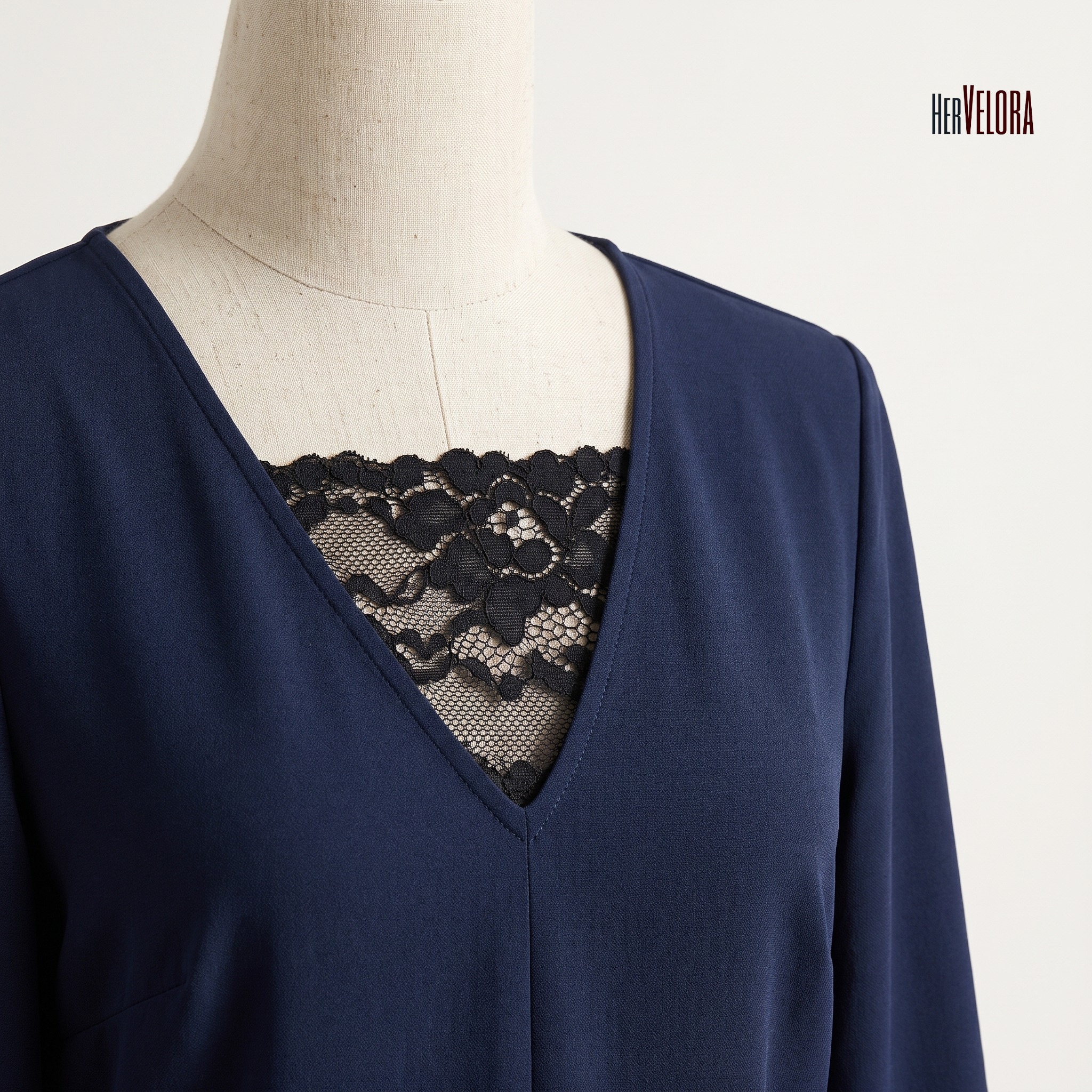
How to make a low cut or sheer top modest without buying a new top starts with knowing which problem you have. You order the top. It looks perfect on the model. It arrives, you put it on, and the neckline sits about two inches lower than the photo suggested, or you catch yourself standing near a window and realize the whole thing is basically see-through. Neither of these means you bought the wrong top. It usually just means the top was never designed to be worn alone in the first place, and nobody told you that at checkout.
Low-cut and sheer are two completely different problems, even though they get lumped together as “this needs to be more modest.” One is about depth. The other is about opacity. Fixing them the same way is how you end up with a bulky, over-layered outfit when a much smaller adjustment would’ve done the job.
Fixing a Neckline That’s Lower Than You Want
The instinct here is usually to grab a full T-shirt and wear it underneath, which works but also adds a whole extra layer of fabric you don’t actually need — you’re not trying to cover your whole torso, just close a gap at the top.
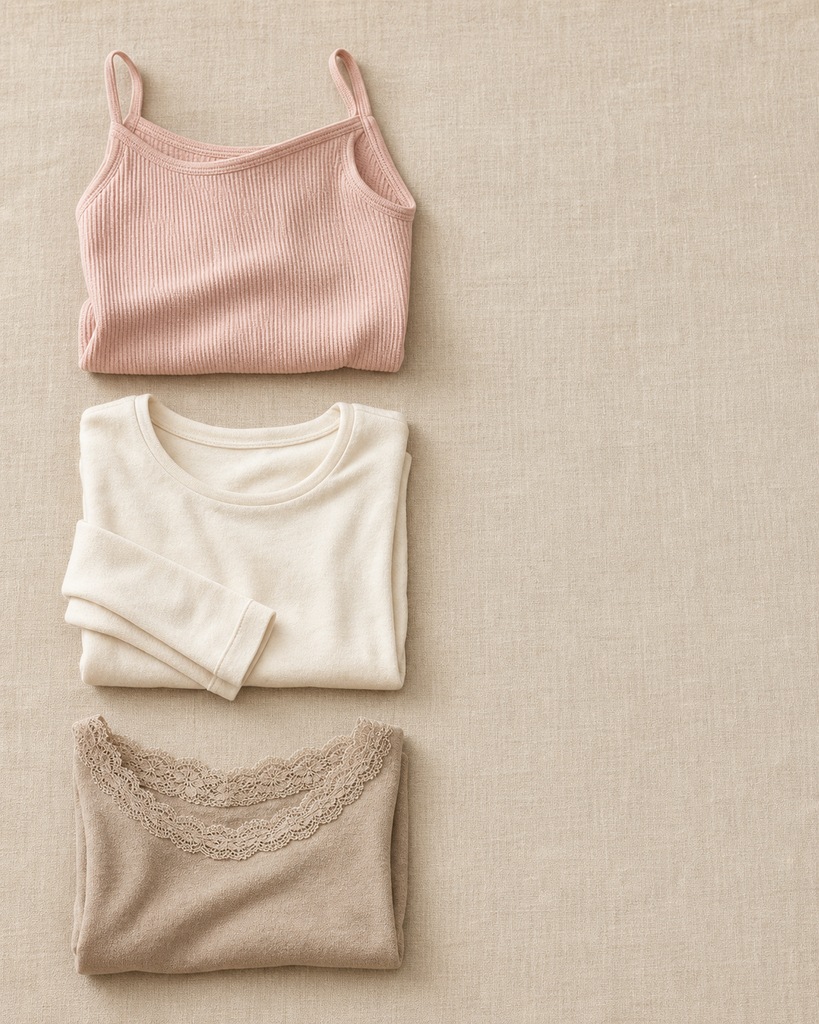
A camisole or crop undershirt, cut off with a band that sits below the bust, does the same job with a fraction of the bulk. The trick is matching the camisole’s own neckline to sit slightly higher than the dip you’re trying to close — not flush with the top’s neckline, but a visible inch or so above it, so there’s no gap where skin still shows through the two overlapping necklines. A camisole with the same neckline depth as the top will still show everything you were trying to hide; the coverage layer needs to actually sit higher.
If the gap is small — a scoop that’s just slightly deeper than you’d like rather than a real plunge — a clip-in modesty panel (a small lace or fabric insert that pins or clips to the inside of the neckline) can close it without adding a full second garment at all. It’s a niche product, but it exists specifically for this exact complaint, and it’s worth knowing about before you default to a full undershirt every time.

Fixing a Top That’s See-Through
This one’s genuinely a different fix. A sheer top isn’t lacking coverage at the neckline — it’s lacking opacity everywhere, which means a crop undershirt that only covers the chest area won’t solve it. You’ll get a strange effect where the chest looks fine and everything below it is still visible.
For actual sheer fabric, you want a full-length shell — a slim, close-fitting layering piece that covers torso and sleeve length to match the top. Slim-fit matters more than usual here, since a loose or boxy shell under a sheer top will show its own silhouette through the fabric, which usually looks more noticeable than the sheerness did in the first place.
Color makes a real difference too, and it’s the detail almost everyone gets wrong. White reads as “obviously wearing an undershirt” under most sheer fabrics — it creates contrast exactly where you’re trying to be invisible. A nude or blush tone closer to your actual skin tone blends in far better, and for darker or printed sheer tops, matching the shell to the top’s dominant color (not your skin) usually disappears more convincingly than nude does.
When It’s Both at Once
Sometimes a top is low-cut and sheer — a wrap-style blouse in a lightweight chiffon, for instance. Don’t stack two separate fixes on top of each other; that’s how you end up in three layers for one shirt. A single full-length shell in a color matched to your skin or the top usually solves both problems at once, since it’s already covering the torso for opacity and, worn with a slightly higher neckline than the top itself, closes the depth gap too. Crop undershirt is the exception — if the sheerness is only really an issue at the chest and the rest of the fabric is lined or thicker (common on drapey blouses), a crop piece alone can be enough, and it’s worth checking the garment closely before assuming you need the full shell.

Is It Actually Illegal to Wear a Sheer Top?
This comes up a lot, and the honest short answer is: generally no, wearing a sheer top with normal undergarments underneath isn’t a legal issue anywhere reasonable clothing is sold — indecent exposure laws are about actual nudity, not about a top being visually thin. That said, laws vary by location and this isn’t legal advice, just general context; if you’re genuinely unsure about a specific setting (a workplace dress code, a particular country while traveling), that’s a “check the actual policy” question, not a “check a blog post” question.
The Actual Habit Worth Building
The pattern underneath all of this: don’t return the top or write it off as “not modest enough.” Most tops aren’t inherently immodest, they’re just designed assuming you’ll style them, the same way a strapless dress assumes you already own the right bra. Building a small rotation of layering pieces — one camisole in your skin tone, one full shell, one crop piece — means almost anything you buy afterward becomes wearable with a thirty-second fix instead of a return label.
For wedding guest dressing, see what not to wear as a wedding guest.
[…] a layer underneath is sometimes the honest answer. Those fixes, including half-camisoles, are in How to Make a Low-Cut or Sheer Top Modest (Without Buying a New Top). This guide is for the more common case: the dress is fine everywhere except one […]
[…] in a Low-Cut Dress Without a Camisole: The Modesty Panel Guide goes through it in full, and How to Make a Low-Cut or Sheer Top Modest (Without Buying a New Top) covers the other options. The piece itself is the Lace Modesty Panel 3-Pack — three lace panels, […]
[…] Over a Sleeveless Dress to a Wedding (Church Ceremony Included) covers the shoulder question, and How to Make a Low-Cut or Sheer Top Modest (Without Buying a New Top) has more fixes from what you already […]
[…] your top is sheer as well as low-cut, stacking fixes gets bulky — how to make a low-cut or sheer top modest covers which single layer solves […]