Can a 70-Year-Old Wear a Sleeveless Dress?

Yes, a 70-year-old can wear a sleeveless dress. There is no age at which a sleeveless dress stops working, and there is no rule that says arms must be covered after a certain birthday. What matters is the same set of questions that matters at any age: does the dress fit well, does it suit the occasion, and do you feel comfortable in it for the hours you will be wearing it.
That last part is the one worth spending time on, because it is personal. Some women at 70 wear sleeveless dresses bare-armed and never think twice about it. Others prefer a layer over their arms, not because anyone told them to, but because that is how they feel most like themselves. Both choices are fine. This post covers both, so you can pick the version that suits you.
What changes at 70, and what does not?
What does not change is the basic test for any dress: the shoulders sit where they should, the armholes do not gape or dig in, and the length works with your shoes. A dress that passes those tests at 40 passes them at 70 too.
What does change, for many women, is comfort over a long day. Skin on the upper arms softens with age, and a sleeveless dress puts that on show. That is not a problem to solve unless it bothers you. If it does not bother you, there is nothing more to do. If it does, the answer is a layer, not a different dress — which is good news, because it means the dress you already like stays in play.
Heat matters too. A sleeveless dress is often the cooler choice in summer, and adding a heavy jacket to it defeats the point. Any layer you add should be light enough that you still feel the benefit of the sleeveless dress underneath. A cropped shrug that covers only the arms and shoulders does that. A full cardigan, on a hot day, usually does not.
How do you wear a sleeveless dress bare-armed?
If you are wearing it bare-armed, three details do most of the work. First, the armhole: a higher, closer armhole looks neater than a deep, scooped one, and it keeps underwear out of sight from the side. Try the dress on and check the side view in a mirror, not just the front. Second, the strap width: a wider shoulder, two fingers or more, tends to sit better than a thin spaghetti strap, which can dig in and draw the eye to exactly the spot you may not want attention on. Third, the neckline: a boat neck or a modest scoop draws the eye up toward the face, which balances the bare arms below.
Colour helps as well. A shade that suits your skin makes your arms look healthier, and a print can break up a large area of skin so it reads as part of the outfit rather than as the whole story. None of this is about hiding. It is about the dress looking considered rather than thrown on.
One caution that applies at any age: cap sleeves are often the worst of both worlds on softer arms. They end right at the widest part of the upper arm and cut across it, which makes the arm look wider. If a dress has cap sleeves and they bother you, a sleeveless dress with a separate layer is usually the better starting point.
What if you want your arms covered?
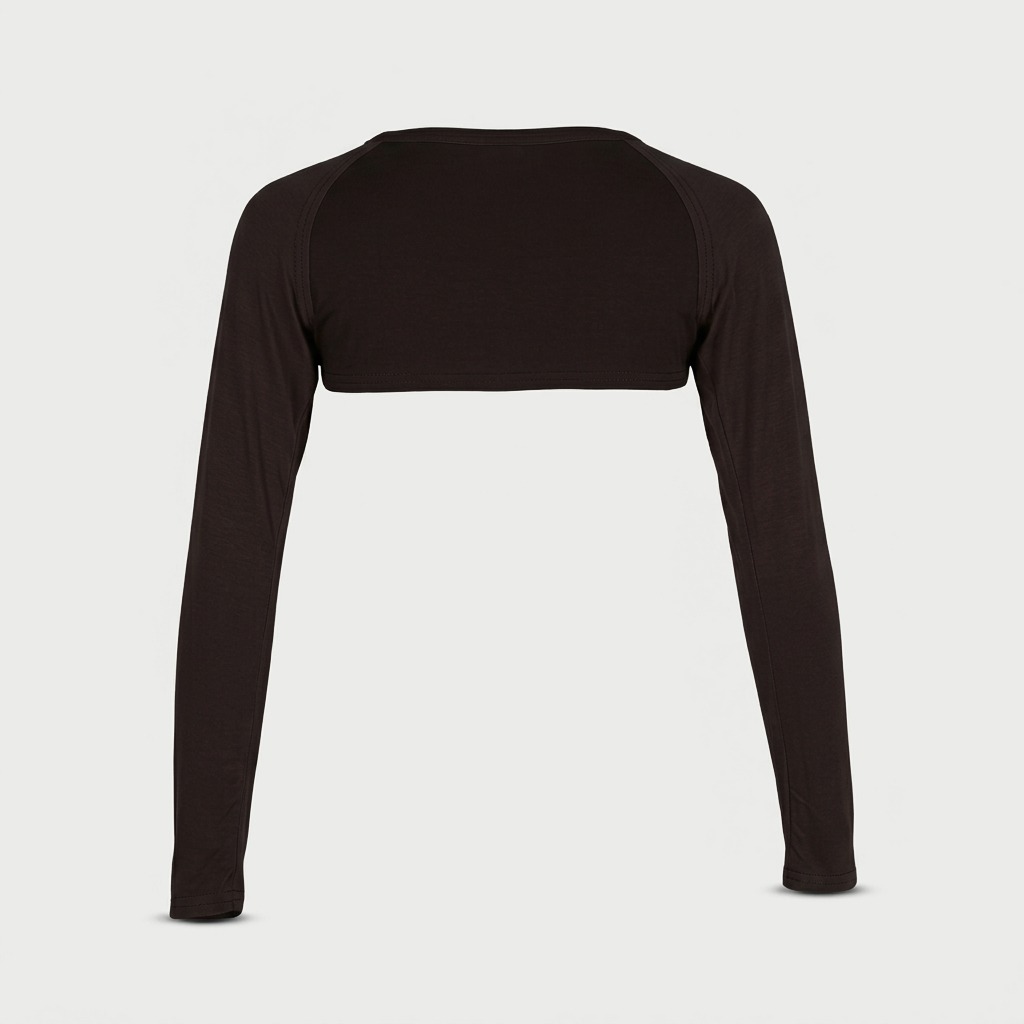
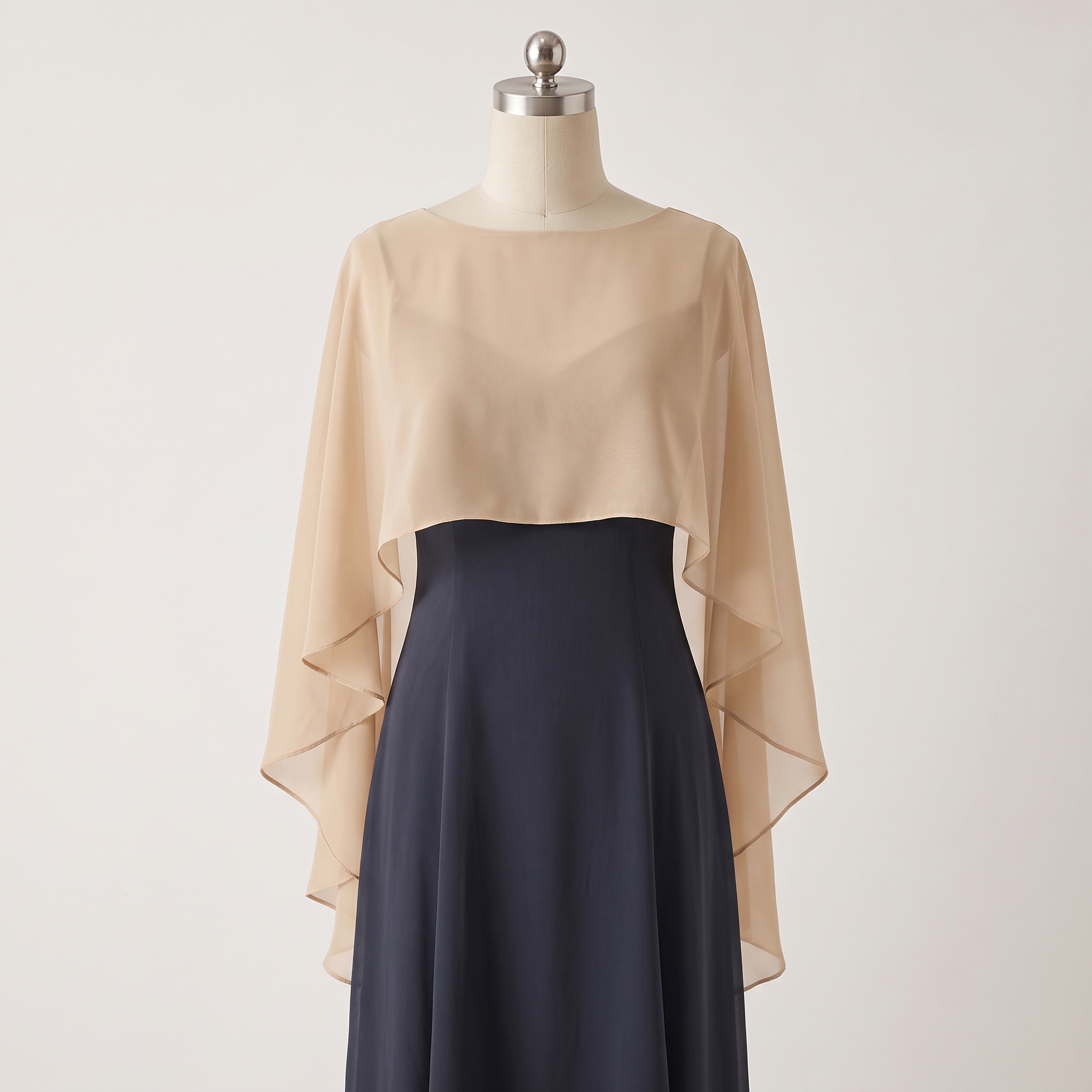
Then the simplest answer is a bolero: a cropped long-sleeve shrug that slips over a sleeveless dress and covers the arms and shoulders while leaving the rest of the dress visible. Our bolero is $19, comes in twelve colours, and needs no sewing and no tailor — it goes over the dress you already own. Because it is cropped, it does not add bulk around the waist or change the shape of the dress. It just adds sleeves.
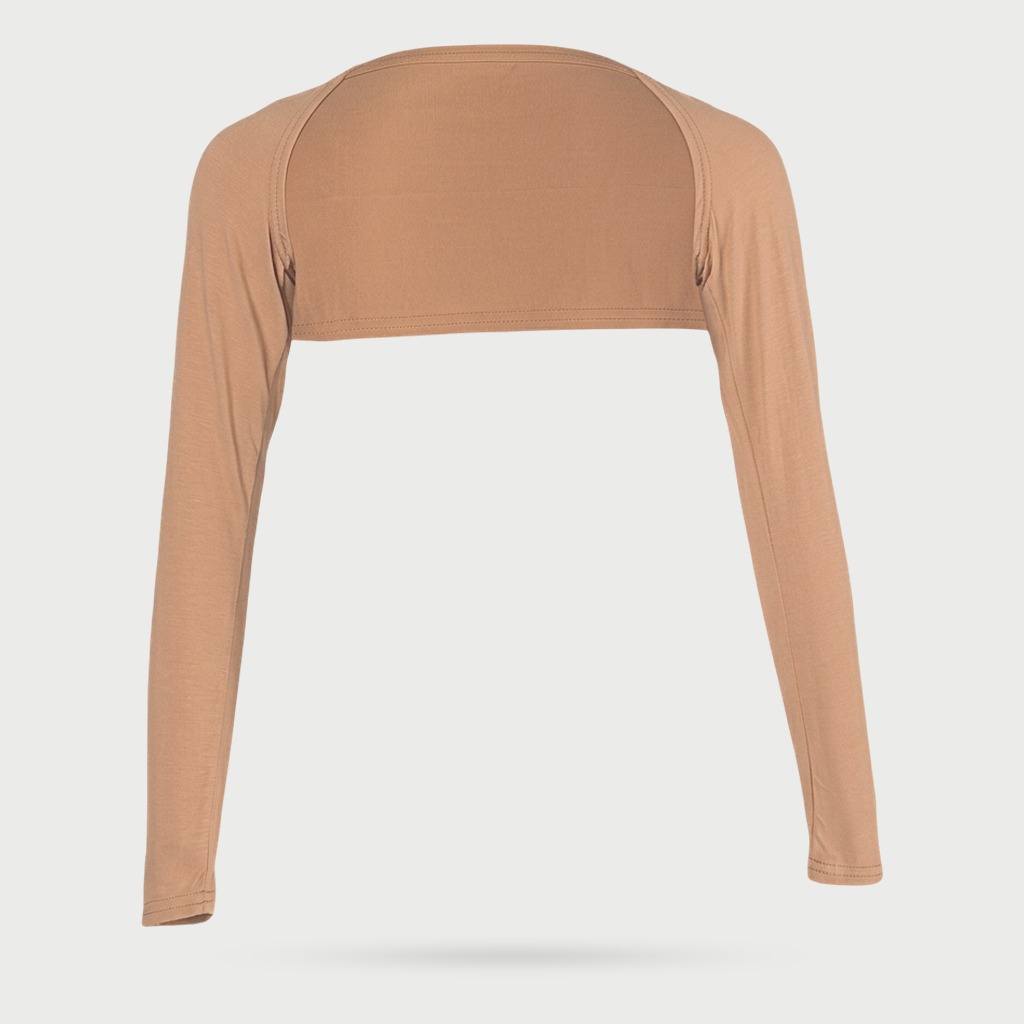
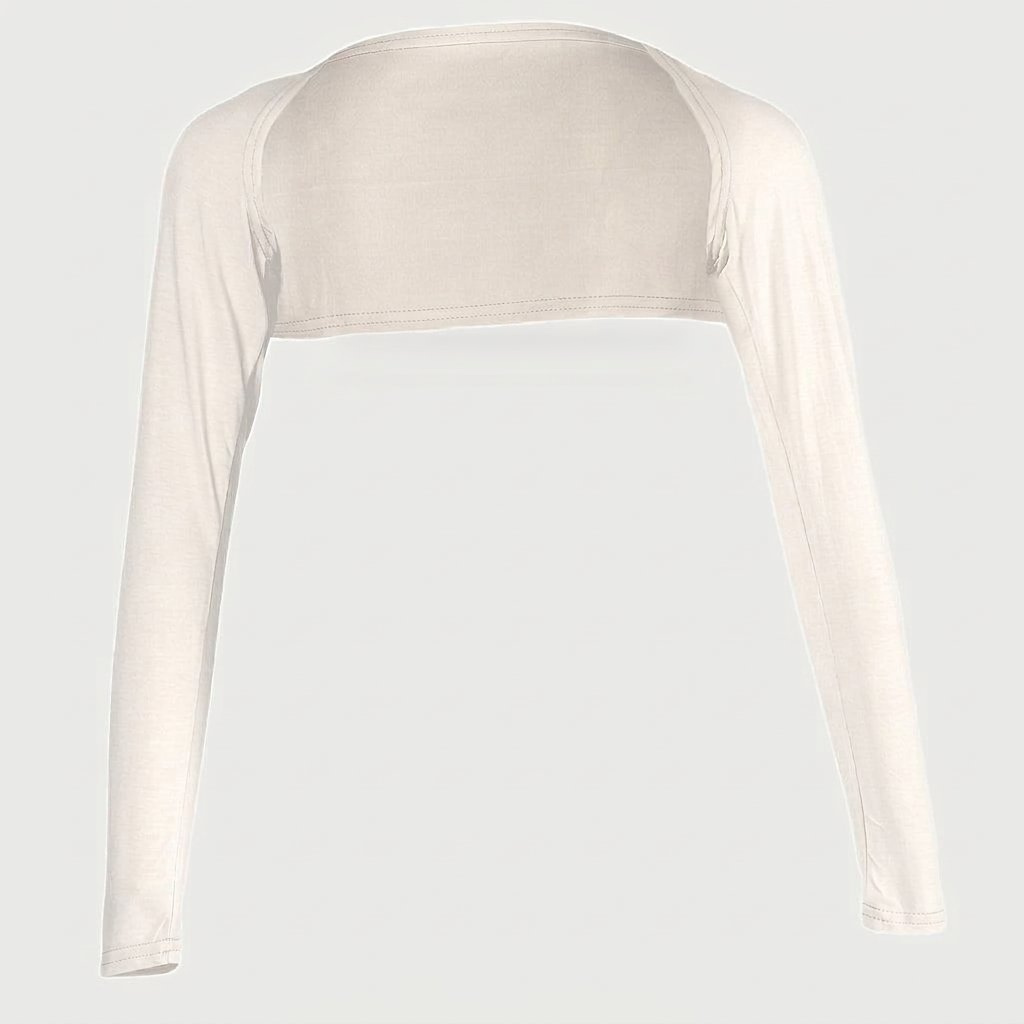
Colour choice here is straightforward. Match the bolero to the dress for a quiet, one-piece look, or pick a neutral — black, beige, camel — that sits against most dresses without competing with them. Black is the safest choice for an evening event. Beige and camel work better in daylight, where black can look heavy against a light dress.
For a fuller explanation of how a bolero differs from a shrug, and which one suits which occasion, see bolero vs shrug: what is the difference. The short version is that a bolero is the more structured, more formal of the two, which is why it is the one most women reach for at a wedding or a church service.
A chiffon wrap is the other option, and it suits a different mood. The wrap is $38, sheer, and drapes over the shoulders rather than fitting like a sleeve. It is looser and softer than a bolero, and it can come off for dancing or for the reception while the bolero stays on. If you like the idea of coverage you can adjust during the event — on for the ceremony, off for the meal — the wrap gives you that choice. If you want coverage that stays put without thinking about it, the bolero is the steadier option.
What about a wedding, church or formal event?
At a wedding or a church service, the question is less about age and more about the setting. A sleeveless dress is fine for most weddings, but some churches and formal venues expect shoulders covered, and a bolero settles that without changing the dress. Wear it for the ceremony, and keep it on or take it off for the reception as you prefer.
For the mother-of-the-bride version of this same decision — covering arms without looking matronly — see what to wear over a sleeveless dress as mother of the bride. The advice there is the same at its core: the layer should match the formality of the event, not fight the dress.
Colour matters at a wedding in a way it does not at a lunch. White, ivory and anything close to white are for the bride, whatever your age. A bolero in a colour that clearly reads as a colour — navy, dusty blue, sage, black — keeps you on the safe side. If your dress is pale, a darker bolero also stops the whole outfit reading as one pale block.
What about work or a daytime event?
For work, the test is the office, not the calendar. A sleeveless dress on its own suits a relaxed office; a formal office usually wants shoulders covered. The bolero covers that in the same way it covers a church service, and the full work question — what makes a sleeveless dress appropriate at work, and what does not — is answered in how to make a sleeveless dress work appropriate.
For a daytime event — a lunch, a garden party, a family gathering — the same rules apply in a lighter key. A bolero in a light colour, or the wrap if the day is warm, is usually enough. The mistake to avoid is over-layering: a heavy jacket over a sleeveless summer dress looks like two outfits at once. Keep the layer light, cropped and close to the dress in tone.
The short version
A 70-year-old can wear a sleeveless dress, bare-armed or covered — the choice is yours, not the calendar’s. Check the armhole and the strap width, pick a neckline that draws the eye up, and if you want your arms covered, add a bolero ($19, twelve colours) for a fitted sleeve or a chiffon wrap ($38) for a softer drape. For a wedding or church, the bolero is the safer formal answer. For work, match the layer to the office. And if the dress fits well and feels comfortable for the whole event, that is the whole test passed.