70, 90 or 180cm — which scarf size do I actually need?

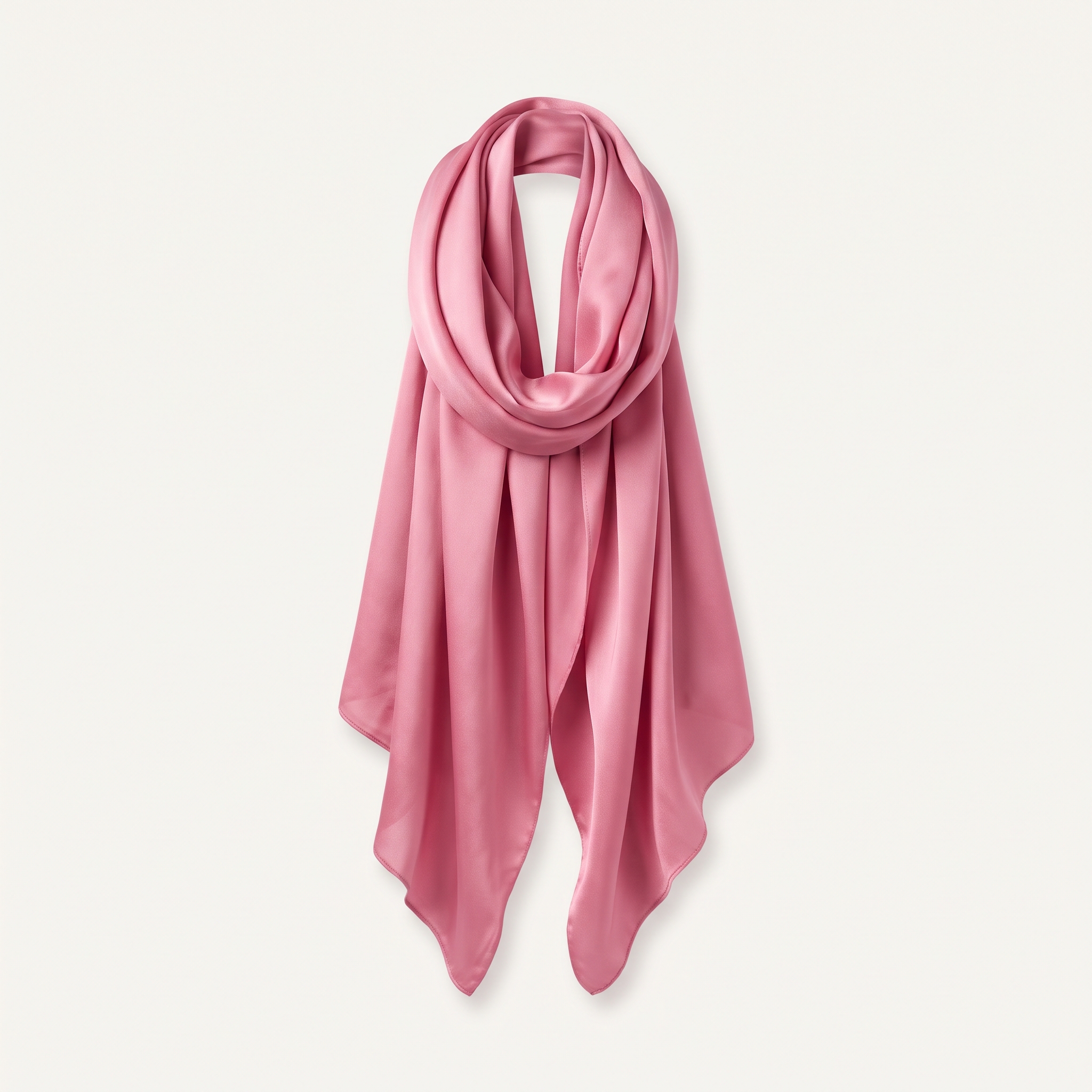
Scarf sizes look like a small decision until you buy the wrong one. A 70cm square will not wrap your shoulders, however you fold it. A 180cm scarf will not tie into a neat neck knot without a lot of leftover fabric. The size is the product, in a way that colour is not. So: which size do you actually need? It depends on the job you want it to do, and the three sizes in this post do three different jobs.
What does a 70×70 neckerchief do?
A 70×70 neckerchief is a tie-on accent. It ties in a small, neat knot at the front or side of your neck, loops through a ponytail or bun, bows onto a bag handle, or wraps round your wrist. Because there is less fabric, the knots sit neater and there is less weight pulling them loose — a double knot or tucking the ends under the band keeps it in place for the day.
What it will not do is just as important. At 70cm it will not wrap your shoulders and it is not a full hair covering. If you buy it expecting a wrap, you will be disappointed, and that disappointment is a sizing error, not a product fault. Ours costs $18, in nine prints, in a silk-feel polyester satin. Buy the 70 when the job is at the neck, in the hair as a band, or on a bag — small, neat, finished.
What does a 90×90 square do that a 70 cannot?
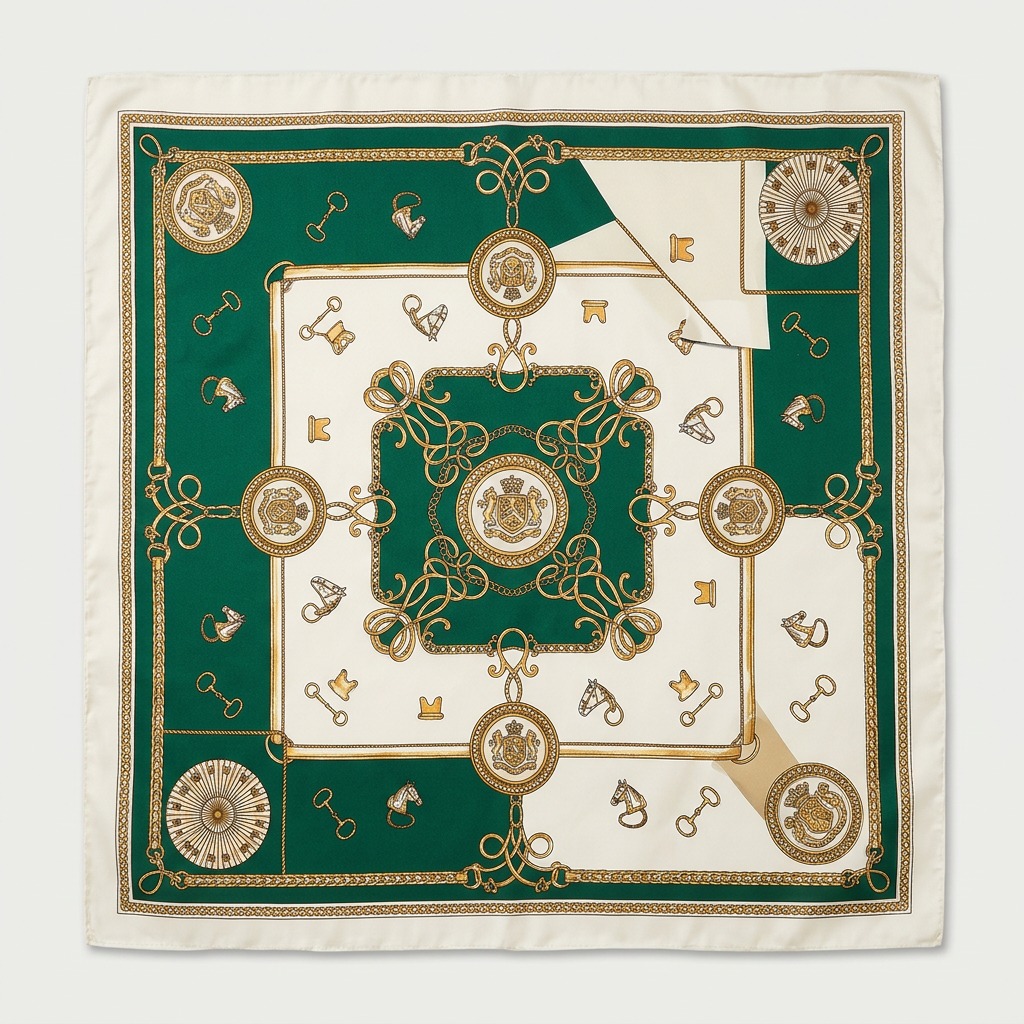
A 90×90 square is the size jump that turns an accent into a piece of styling. Folded on the diagonal, the triangle is wide enough to cover your hair. Rolled into a band, there is enough length to tie round a ponytail or a bag handle with ends to spare. Knotted loose at the neck over a plain top, it has presence in a way the 70 does not — it reads as a scarf, not a ribbon.
The 90 also does the jobs the 70 cannot reach: worn as a shawl over the shoulders, folded into a top, or wrapped as a bag cover. Our satin square costs $21, in ten prints, in the same silk-feel polyester — not silk, and priced like it is not. The wearing ways for both square sizes, fold by fold, are in our guide to how to wear a square scarf; this post is the buying decision, and that post is the how-to. One more honest note: satin is smooth, so it can slide, especially on straight, fine hair. Fold it into a band rather than wearing it loose, tie it at the nape under your hair, or add two small grips at the sides.


What does a 180×90 scarf do that a square cannot?
A 180×90 scarf is a long rectangle, and length is a different kind of size. At 180cm long and 90cm wide, it drapes as a wrap over the shoulders, loops twice round the neck, knots at a bag handle end to end, threads through belt loops as a belt, or ties as a halter or bandeau top. A square, even a 90, runs out of fabric halfway through most of those jobs — that is the sentence to remember when you are choosing. If you have tried to tie a small square on a bag and watched it come undone by lunch, the problem was length, not technique.
Ours costs $28, in seventeen colours, in polyester satin with a silk-feel finish. The same slip warning applies: satin is smooth, so a double knot holds better on a glossy bag handle, and a small pin helps in hair. And the same honesty about warmth: this is a light, smooth scarf, not a heavy winter wrap. If you want warmth, you want a different fabric altogether.
Does your height change the size you need?
Height changes how a size looks, not what it can do. A 180cm scarf on a petite frame is a lot of fabric — it will drape to the knees when worn long, and it needs folding or looping to sit where you want it. That is not a reason to avoid it; it is a reason to try it looped twice rather than worn long. A 70cm square, on the other hand, looks the same at any height, because it is a knot at the neck, not a drape. The honest rule is to buy for the job first and adjust the wear for your frame second: if the job needs length, take the length and fold it; if the job needs neatness, take the small square and let it be small.
Which size if you only buy one?
Buy by the job, not by the price. If your job is neck-only — a knot at the neck most days, a band in the hair, a bow on a bag — the 70 is enough, and it is the neatest at that job. If you want one scarf that does the most things — neck, hair, bag, shoulders, top — the 90 is the middle that covers the most ground. If you want wrap-length drape, a scarf that works as a shawl, a belt and a top, only the 180 does it. There is no formula beyond that, and any post that gives you one is inventing it. Start from what you will actually do with it, and the size picks itself.
One last line, because it matters across all three: none of these is silk. They are silk-feel polyester, and they are priced like it — $18, $21 and $28. That is a feature, not a catch: they wash without fuss, which matters for something worn against the skin and tied daily.
The short version
70cm for the neck, hair band and bag bow. 90cm for the square that also covers hair and shoulders. 180cm for wrap-length drape, belts and tops. For the wearing ways, see how to wear a square scarf, and for how the long scarf works as a layering piece, see how to build a fall capsule wardrobe.