What is the difference between a bridal wrap, a shawl, a cape and a jacket?

A bridal wrap, a shawl, a cape and a jacket all cover your shoulders, but they are not four names for the same thing. They differ in shape, in how they stay on, and in what they do to the dress underneath. Picking the wrong one is how a guest ends up either cold, covered up to the chin, or fighting a garment all evening.
What is a bridal wrap?
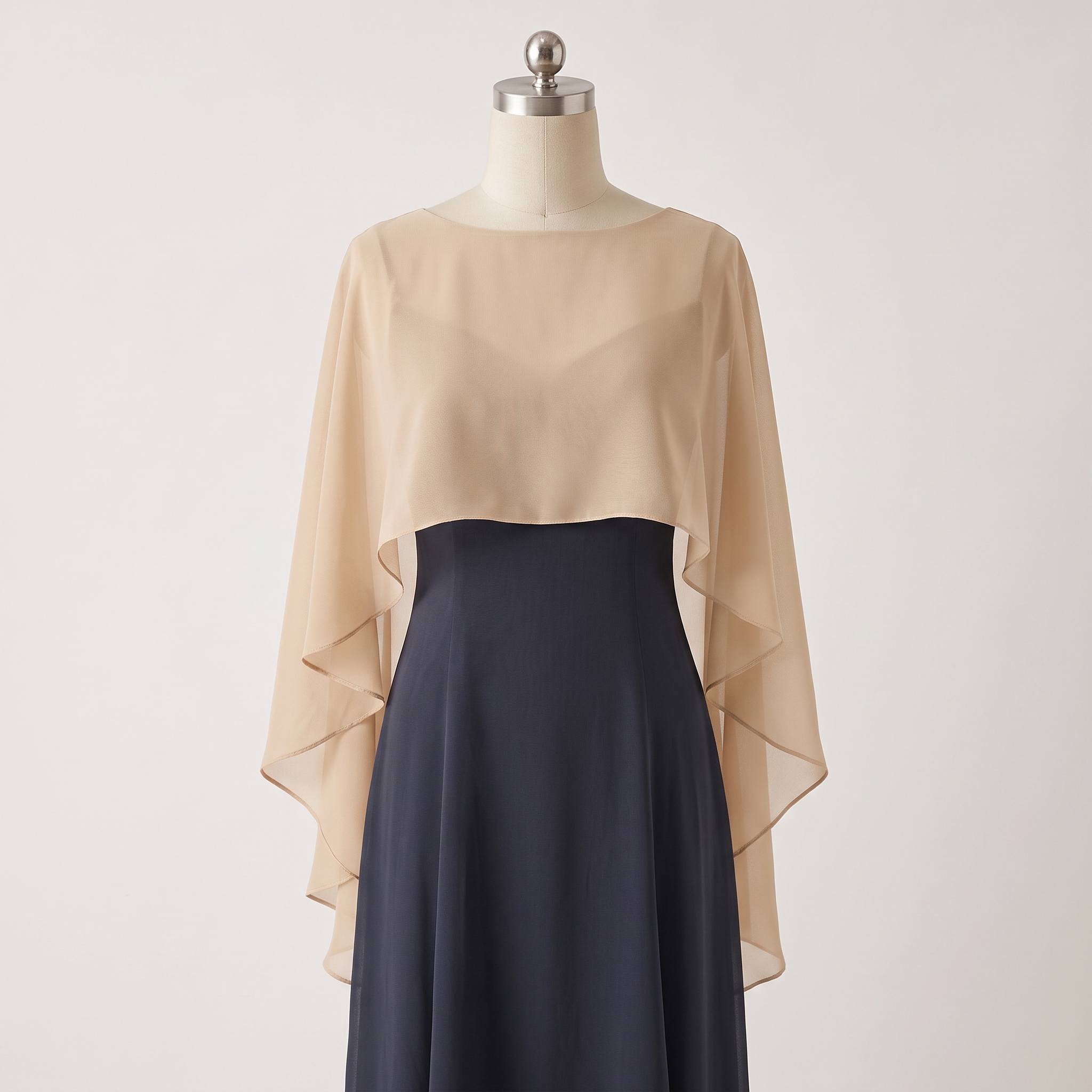
A bridal wrap is a long rectangular shawl, worn draped over the shoulders and arms. Ours is the Plain Chiffon Wedding Wrap ($38, polyester chiffon): a long rectangle that goes over a sleeveless dress for the ceremony and comes off for the reception, no sewing, no clips, nothing permanent. Because it is a rectangle and not a shaped garment, it drapes rather than fits — it softens the shoulders without changing the shape of the dress underneath. That is the whole point for a wedding guest: coverage that does not hide the dress.
A sheer wrap warms a room, it does not replace a coat. On a cold evening it is the indoor layer; the coat still does the outside work. The winter wedding guest guide covers that split properly.
What is a shawl, and how is it different from a wrap?
A shawl is usually heavier and squarer than a wrap, and it is worn folded into a triangle or bunched around the shoulders. A wrap is long and rectangular and drapes in a straight fall; a shawl is a square folded diagonally, with more bulk at the neck and less length down the arms. In practice, a shawl reads warmer and more casual, a wrap reads lighter and more formal. We sell no shawl, so this section carries no image — the distinction is in the shape, and a borrowed shawl photo would only confuse which product is ours.
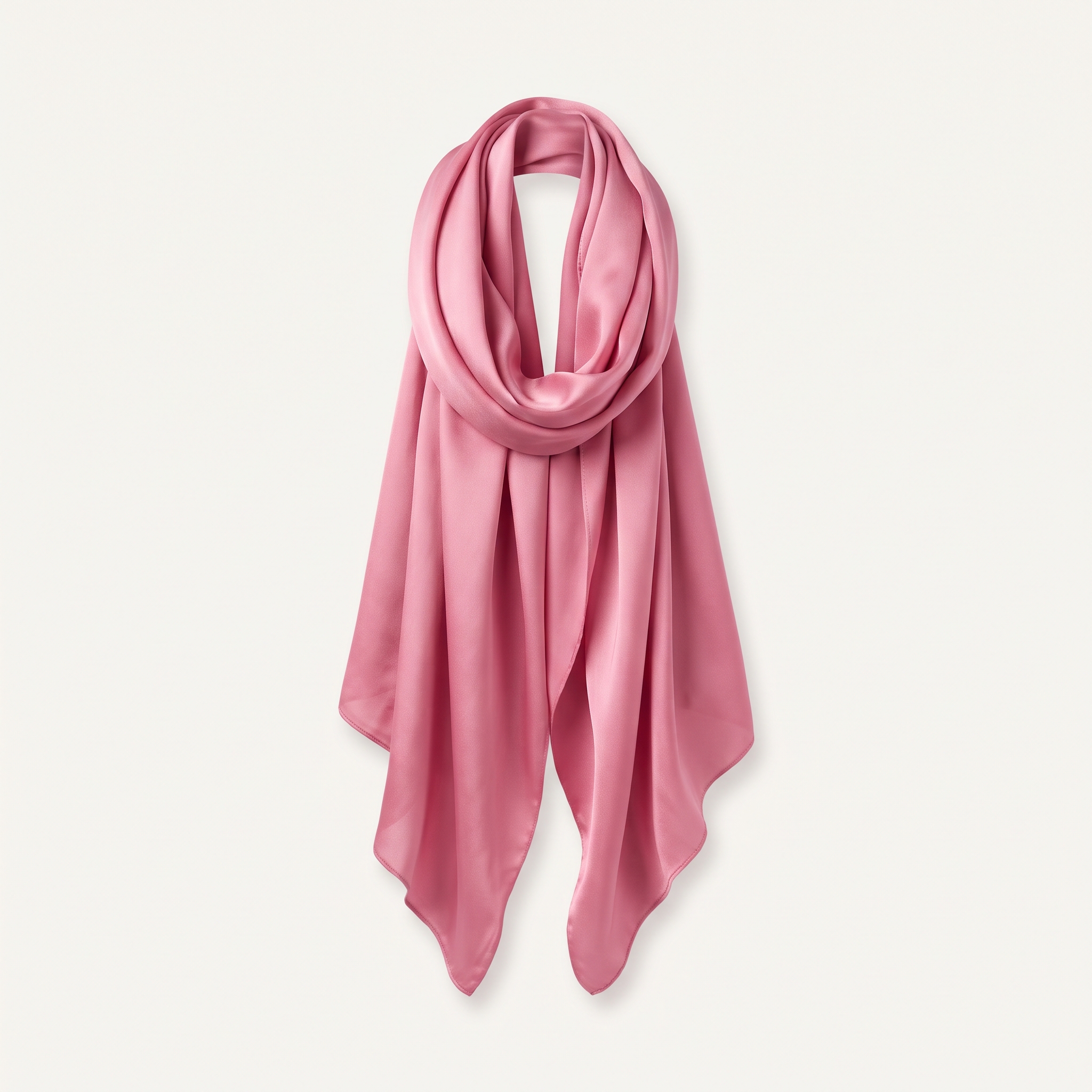
If you already own a large scarf, it can stand in for a wrap: the Oversized Multiway Scarf 180×90 ($28, silk-feel polyester) is long enough to drape the same way. It is a substitute, not the same product, and it is worth saying so plainly — a scarf used as a wrap will not fall quite like a chiffon rectangle, but it covers the same need.
What is a cape?
A cape attaches at the shoulders and falls free around the body, with no sleeves and no fastening down the front. Unlike a wrap, it is a shaped garment: it has a neckline it hangs from, and it stays where it is put because it is worn, not draped. A cape covers the back and arms in one piece, which suits a guest who does not want to adjust anything all evening. We sell no cape, so there is no cape image here and no cape to recommend — the section exists so the comparison is honest about what each shape does.
What is a jacket?
A jacket is structured: sleeves, a fastening, a shape of its own. It changes the outfit rather than covering it — a jacket over a dress makes a different outfit, where a wrap over a dress keeps the same outfit with covered shoulders. That is the real difference for a wedding guest. A jacket also has to fit; a wrap does not. We sell no jacket, so again, no image and no recommendation — just the distinction, so you are not sold a wrap when what you wanted was a jacket, or the other way round.
Which one stays put without using your hands?
A wrap is the piece you adjust most. It drapes, so it moves when you move, and after an hour of sitting, standing, and reaching for a glass, it rarely sits where you first put it. That is not a fault in the wrap — it is how a draped piece behaves — but it matters if you want to forget about your cover for the evening.
A cape stays put better, because it hangs from its neckline rather than resting on your shoulders. You put it on and it stays where it is put, with your arms free underneath. A jacket stays put best of all, because it fastens and has sleeves: once it is buttoned or zipped, it does not drift. A shawl sits between the wrap and the cape — larger than a wrap, so it covers more, but still a draped piece, so it still needs the occasional adjustment.
If you will be carrying a bag, holding a plate, or dancing, that difference decides more than warmth does. A piece that needs both hands to settle is a piece you will be settling all evening.
Which one suits a dress you already own?
Start with the dress, not with the name on the label. A formal dress with a structured bodice pairs better with a cover that has its own shape — a jacket or a cape — because a soft drape can fight the dress’s lines. A flowing dress pairs better with a wrap or a shawl, because the cover moves the way the dress moves.
Then check the occasion. A jacket over a dress reads as a second outfit, which suits a daytime event or a venue where you will be outdoors for a long stretch. A wrap or shawl over a dress keeps the same outfit with covered shoulders, which suits a wedding ceremony or an evening room where the dress itself is meant to be seen. A cape sits between the two: more formal than a wrap, less of a change than a jacket.
Finally, check the label against the shape, not the other way round. Shops use wrap, shawl, and cape loosely, and a piece sold as a cape may behave like a wrap once it is on. Hold it up, see how it hangs, and judge it by whether it drapes, hangs from a neckline, or fastens with sleeves — that test tells you more than the name it was sold under.
Which one should a wedding guest buy?
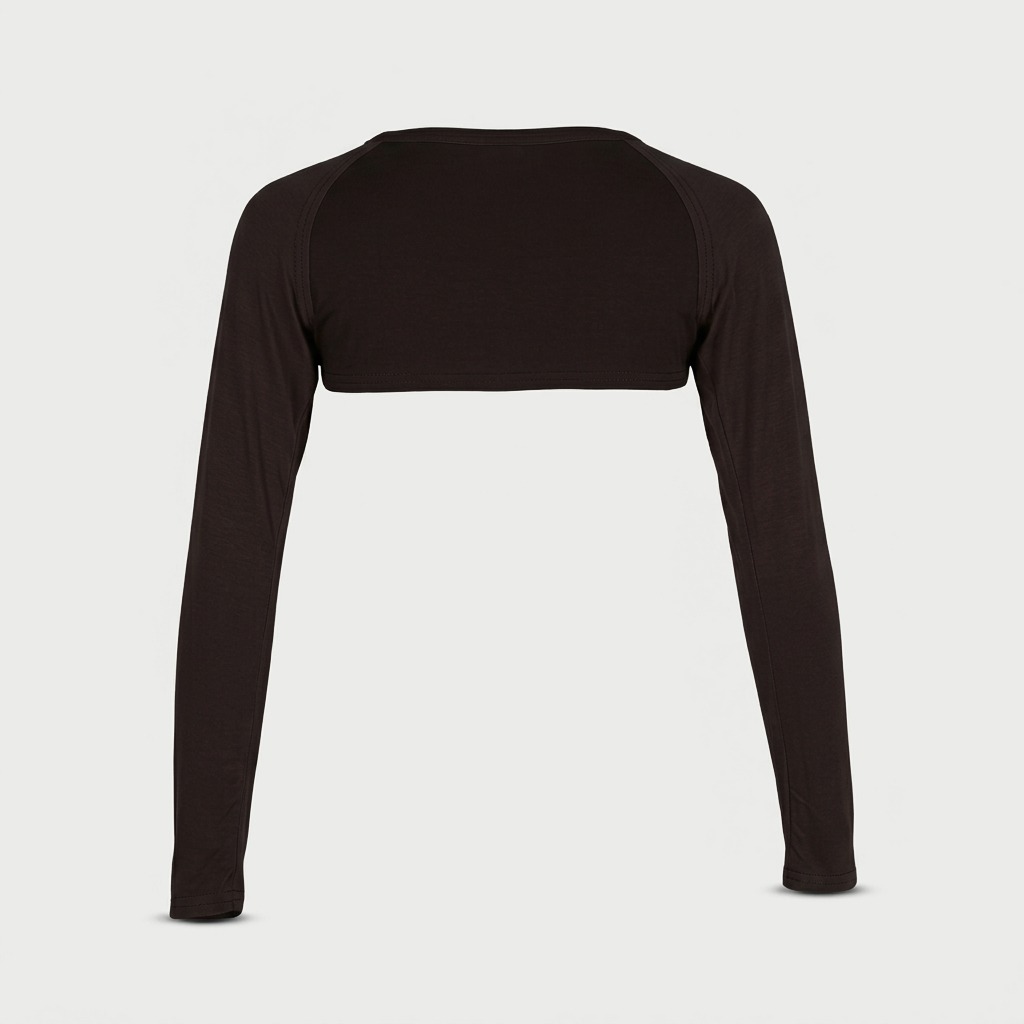
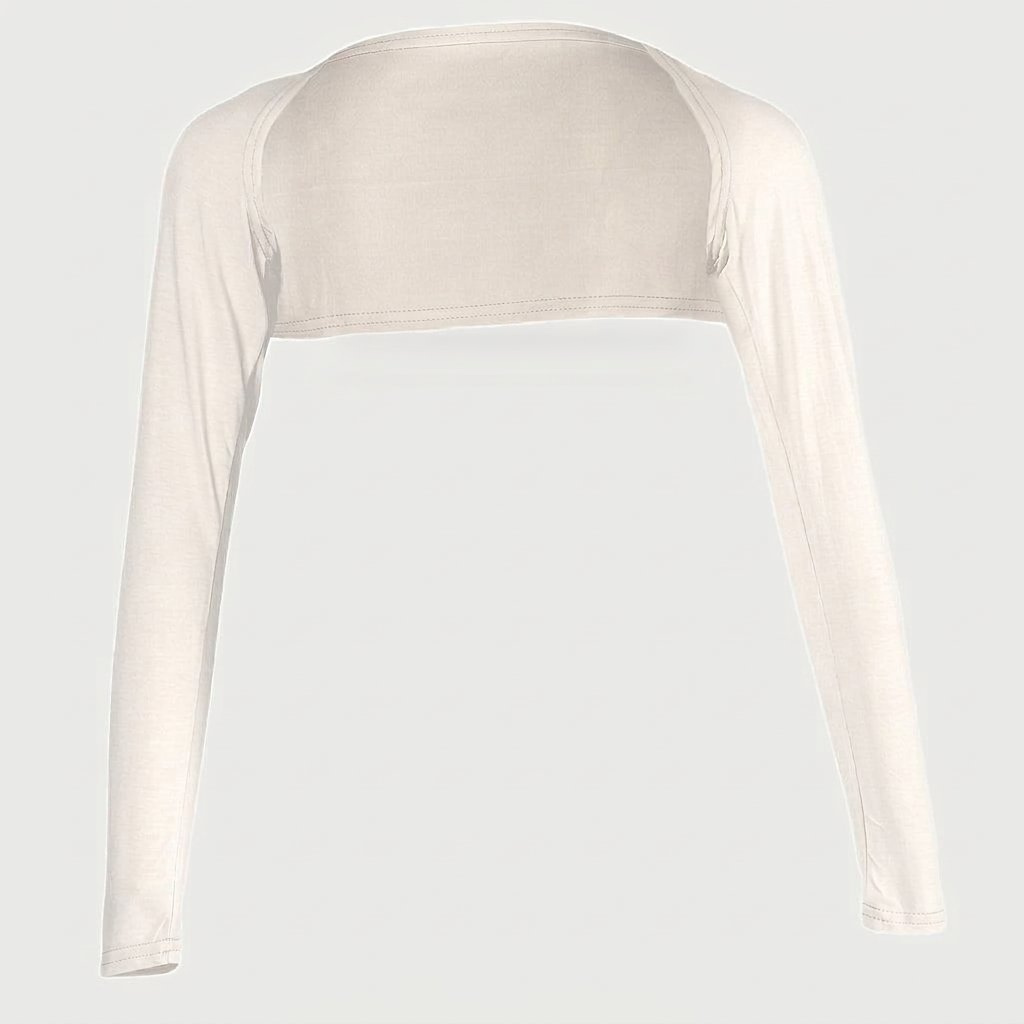
For a wedding guest who wants to keep the dress as it is and cover shoulders for the ceremony, the wrap is the answer: it goes on, it comes off, it does not change the dress. If you want sleeves rather than drape, the bolero is the sleeved alternative — the Bolero Arm Sleeves ($19) slip over a sleeveless dress and give you actual sleeves, which is a different solution from a wrap and is covered properly in bolero vs shrug: what is the difference. If you want warmth outside, buy the coat and let the wrap do the room. And if the wedding is in winter, read the winter wedding guest guide first — it covers the coat-and-wrap split for cold venues.