
Bolero vs Shrug: What Is the Difference?

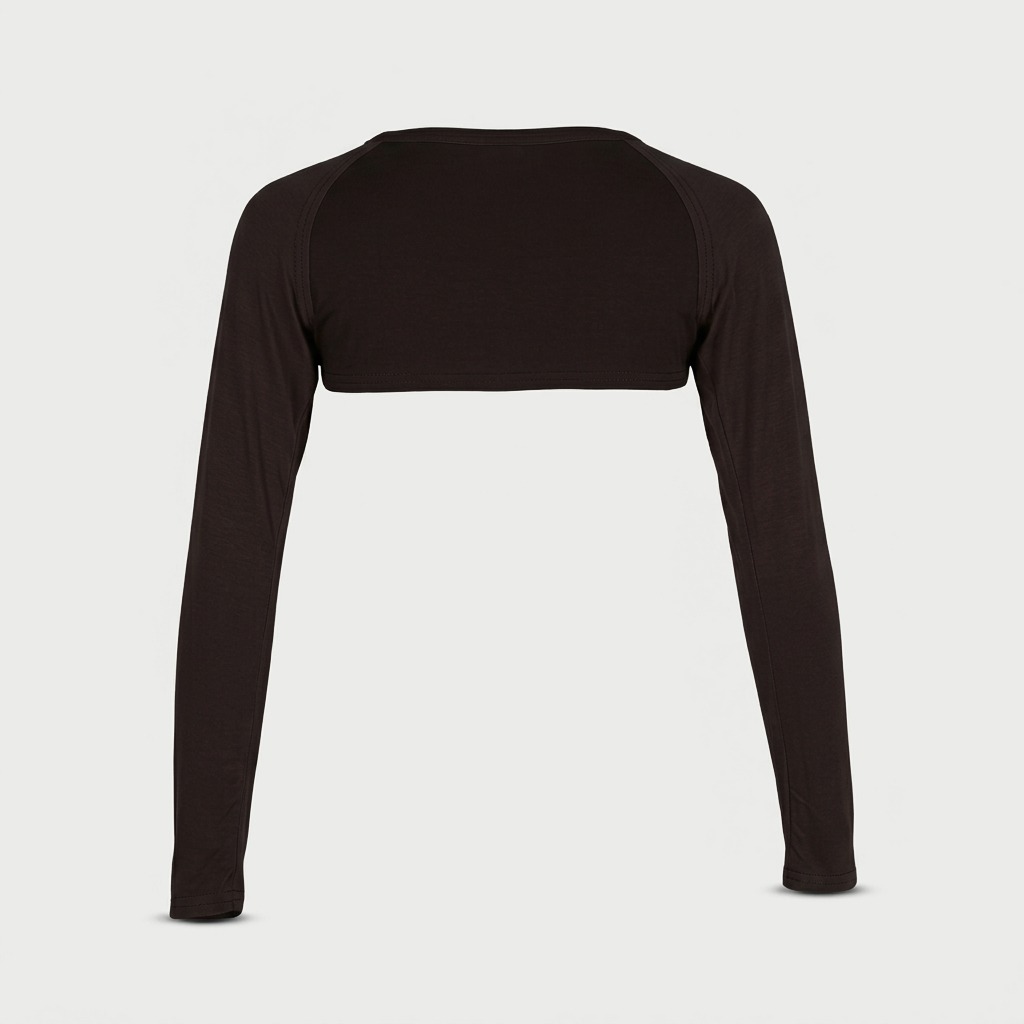
A bolero is the more structured, more formal one; a shrug is the softer, looser one. That is the short answer. The longer answer is that shops use the two words interchangeably, so the label on the listing matters less than the garment in the photo — check the sleeves, the length and the fabric before you buy either.
At a glance, the difference is a matter of shape, not of length alone. A bolero holds a defined, jacket-like shape; a shrug follows the body and drapes. The points below sum up how the two usually compare.
Structure: a bolero is tailored, with a defined shape that holds its own form; a shrug is soft and unstructured, and drapes rather than holding a shape.
Fabric: a bolero is usually made from a smoother, more structured fabric; a shrug is usually knitted or made from a stretch fabric.
Sleeves: a bolero most often has long or three-quarter sleeves, set in like a jacket; a shrug can have short, three-quarter or long sleeves, and the sleeves are part of the same soft drape.
Formality: a bolero reads formal and finished; a shrug reads relaxed and everyday.
Best occasion: a bolero suits a wedding, church service or formal event over a sleeveless dress; a shrug suits everyday layering, office wear and travel.
What is a bolero shrug?
A bolero shrug is a cropped layer worn over the shoulders and arms, over a sleeveless dress or top. The two words got joined because the garments overlap so much: a bolero is traditionally a short, tailored jacket, and a shrug is traditionally a soft, knitted cover-up, and modern listings sell garments that sit somewhere between the two. When a listing says “bolero shrug”, it usually means a cropped, long-sleeve layer that slips over a dress — which is exactly what our bolero is: a cropped long-sleeve shrug in twelve colours, $19, that slips over a sleeveless dress with no sewing and no tailor.
What is a bolero?
A bolero is a short jacket that ends at or just above the waist, with sleeves — most often long or three-quarter — and a more tailored, finished shape than a shrug. It was made for dressier occasions: weddings, evening events, church ceremonies. The fabric is usually smoother and more structured, and the front is open or lightly fastened rather than buttoned up like a cardigan. A bolero covers the shoulders and arms and leaves the rest of the dress visible, which is why it suits a sleeveless dress at a formal event. If the garment in the photo looks like a tiny jacket, it is a bolero, whatever the listing calls it.
What is a shrug?
A shrug is a softer, looser cropped layer, usually knitted or made from a stretch fabric, with an open front and a relaxed fit. Shrugs come with short, three-quarter or long sleeves, and they read more casual than a bolero — everyday wear, office layering, travel. A shrug’s job is light coverage and comfort rather than a formal finish. The classic shrug shape is simple: a rectangle or a circle seamed into sleeves, which is why so many shrugs are knitted at home. If the garment in the photo looks like a soft wrap with sleeves, it is a shrug.
How do bolero and shrug construction and fabric differ?
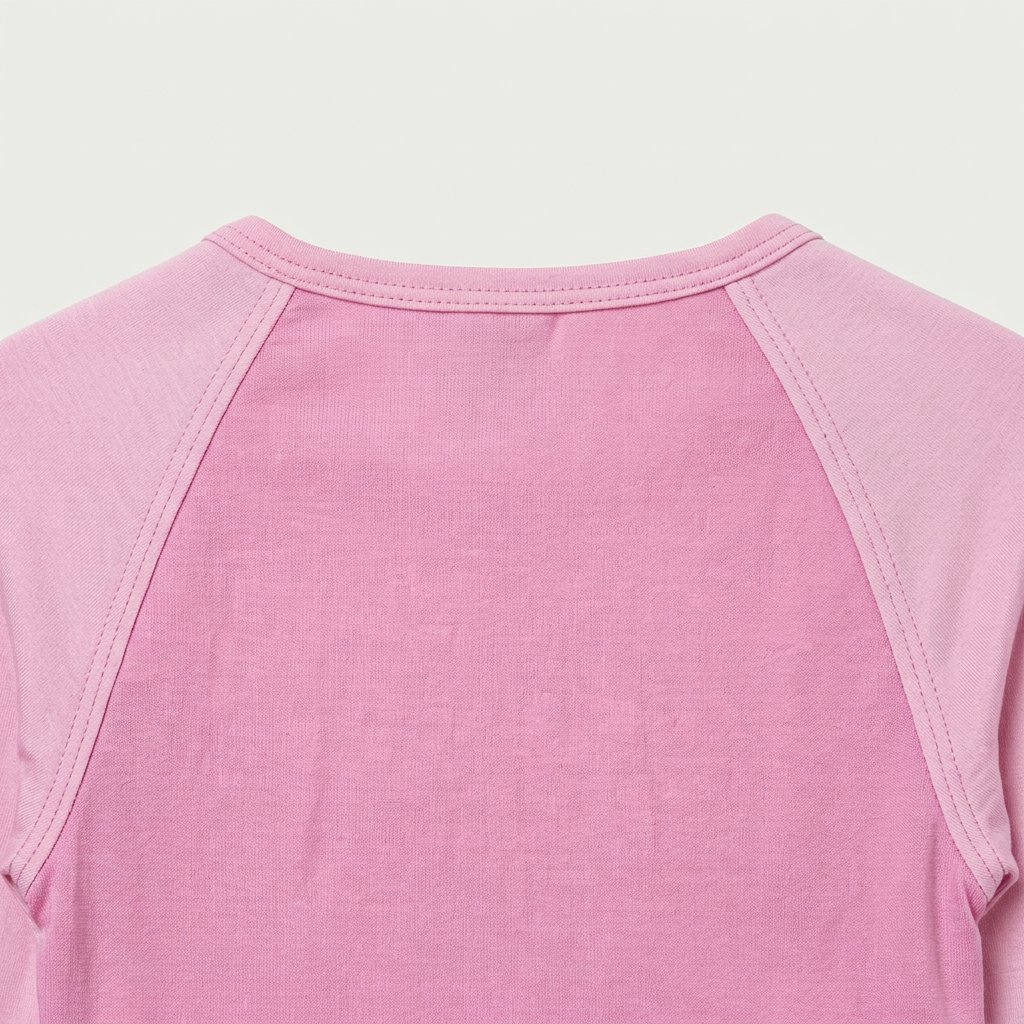
A bolero is cut and sewn like a small jacket. It has tailored shaping, with seams that give it a defined shoulder and a front that opens neatly, and its sleeves are set in — sewn into the body at the shoulder — so the arm and the body keep their separate shapes. That construction is what makes it hold its form over a dress, rather than collapsing into a soft layer.
A shrug is made the other way round. It is usually knitted, or cut from a stretch fabric, and its sleeves are joined across the back, so the whole piece reads as one continuous, soft drape instead of a shaped jacket with separate sleeves. There is little or no tailoring to hold it in place, which is why it falls loosely and moves with the body.
The structure test is simple: if you can see shaped seams, a defined shoulder or a lapel-like front, the garment reads as a bolero; if it looks and feels like a sweater that drapes, with no shaped seams to hold it, it reads as a shrug. Judge that, rather than the label, when the listing uses both words.
What is the difference between a bolero and a shrug?
The difference between a bolero and a shrug comes down to structure, formality and fabric. A bolero is structured and tailored, made for dressy occasions; a shrug is soft and relaxed, made for everyday layering. A bolero usually has long or three-quarter sleeves and a defined shape; a shrug can have any sleeve length and drapes rather than tailors. In practice the line blurs — a soft bolero and a dressy shrug can look almost identical — and many shops label the same garment both ways. So use the photo, not the word: if you need a formal layer, pick the garment that looks tailored and sits neatly over a dress, and ignore whether the listing says bolero, shrug or both.
Where does a cardigan fit?
A cardigan is the longer, usually buttoned layer that sits alongside both. Where a bolero and a shrug are cropped, ending at or just above the waist, a cardigan runs longer — often to the hip or below — and it usually fastens with buttons down the front. It covers more of the dress and the body than either cropped layer, so it is not a shorter bolero or a longer shrug; it is a different kind of cover-up, better suited to warmth and everyday wear than to keeping a formal dress fully on show.
Which one should you wear to a wedding or church?
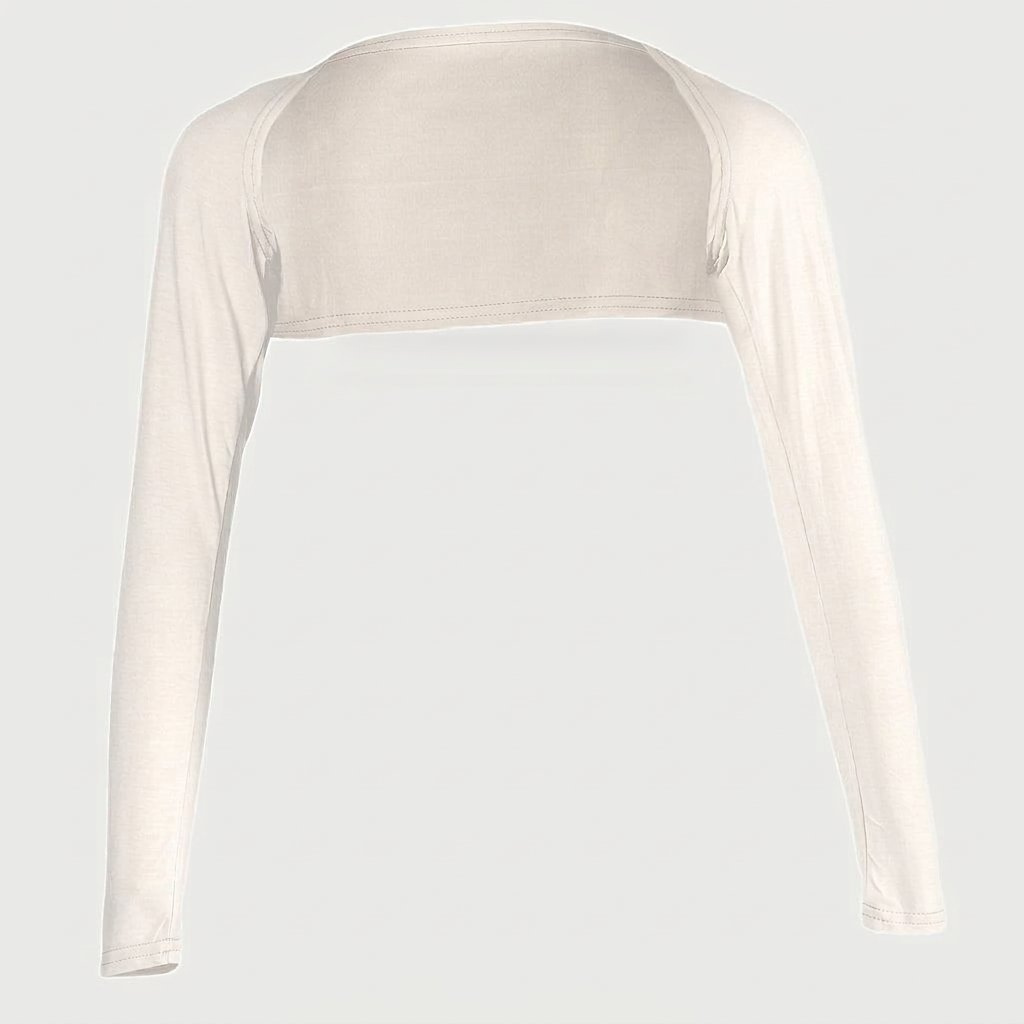
Wear the bolero to a wedding or church. The tailored shape reads formal, the long sleeves cover the arms properly, and it stays in place through a ceremony without adjusting. Our bolero is the wedding-and-church answer for a sleeveless dress: it slips over the dress you already own, it comes in twelve colours so it can match or sit quietly against the dress, and at $19 it costs less than altering the dress or buying a second one. For the wider question of what to wear over a sleeveless dress to a wedding, including the church-ceremony case, see what to wear over a sleeveless dress to a wedding.
Which one should you wear to work?
Wear either to work, depending on the office. A bolero suits a formal office or a client-facing day, because it looks finished. A softer shrug suits a casual office or a day when comfort matters more than polish. The sleeveless-dress-at-work question — what makes it appropriate, and what does not — is answered in full here: how to make a sleeveless dress work appropriate. One caution that applies to both: a cropped layer only works if it stays put. If it slips off the shoulders every time you reach for something, it is the wrong size or the wrong shape for you, and no amount of adjusting at your desk will fix it.
The short version
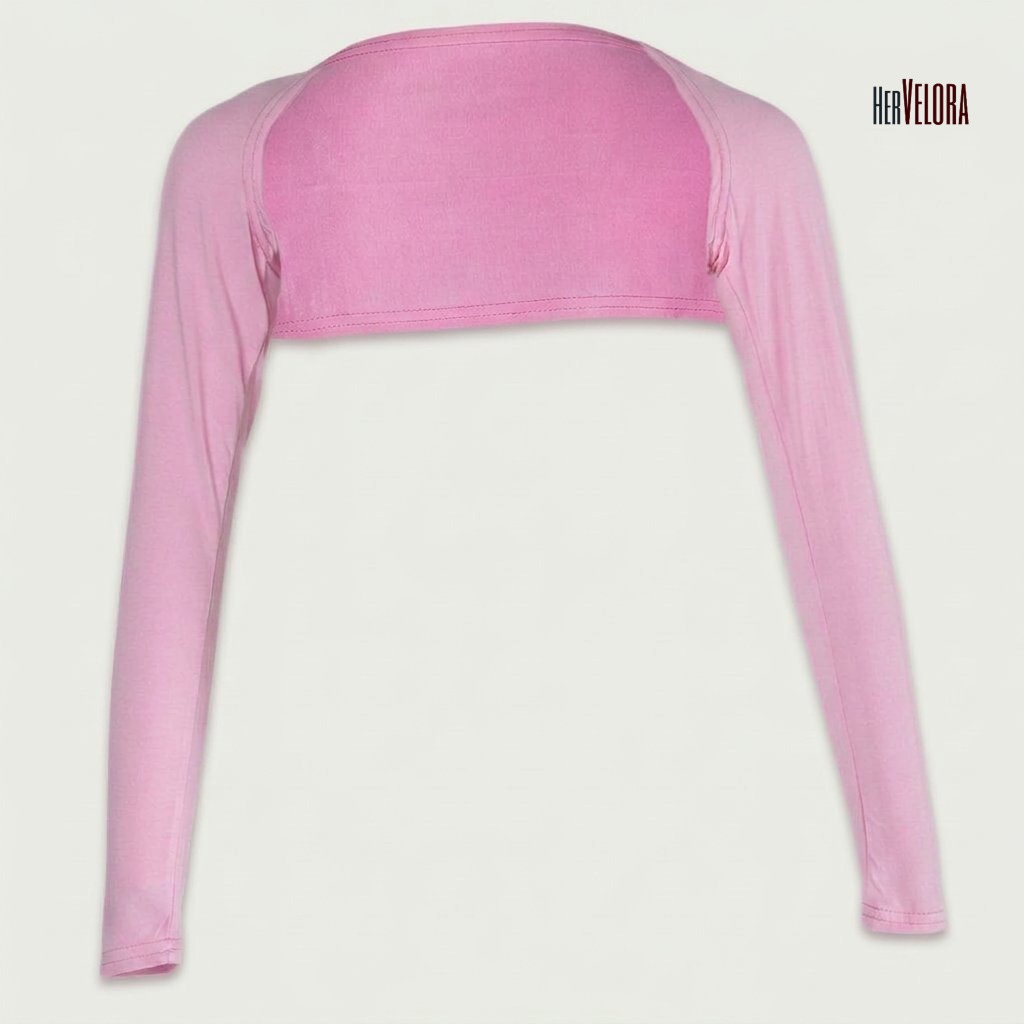
Bolero: structured, dressy, tailored. Shrug: soft, relaxed, everyday. Shops mix the words up, so judge the garment in the photo — sleeves, length, fabric — and pick the one that matches the occasion. For a sleeveless dress at a wedding or church, the bolero is the one.
To decide, check the sleeves, the length and the fabric in the photo. For a formal event, choose a structured bolero, with set-in sleeves and a tailored shape that sits neatly over a dress. For everyday comfort, choose a soft shrug, with a relaxed drape and a fabric that moves with you. If the label is uncertain — if the listing says bolero, shrug or both — ignore the word and judge the photo: shaped seams and a defined form point to a bolero, while a soft, sweater-like drape points to a shrug.
[…] you would rather have sleeves for that same cold hall, a bolero is worth trying – see the bolero vs shrug guide for how the two […]
[…] a fuller explanation of how a bolero differs from a shrug, and which one suits which occasion, see bolero vs shrug: what is the difference. The short version is that a bolero is the more structured, more formal of the two, which is why it […]
[…] for the ceremony and comes off for the reception. A bolero does the same job with sleeves: the bolero vs shrug guide explains how a structured bolero differs from a soft shrug, so you can pick the one that matches […]
[…] and give you actual sleeves, which is a different solution from a wrap and is covered properly in bolero vs shrug: what is the difference. If you want warmth outside, buy the coat and let the wrap do the room. And if the wedding is in […]