
How to Tie a Neckerchief So the Knot Stays Put All Day

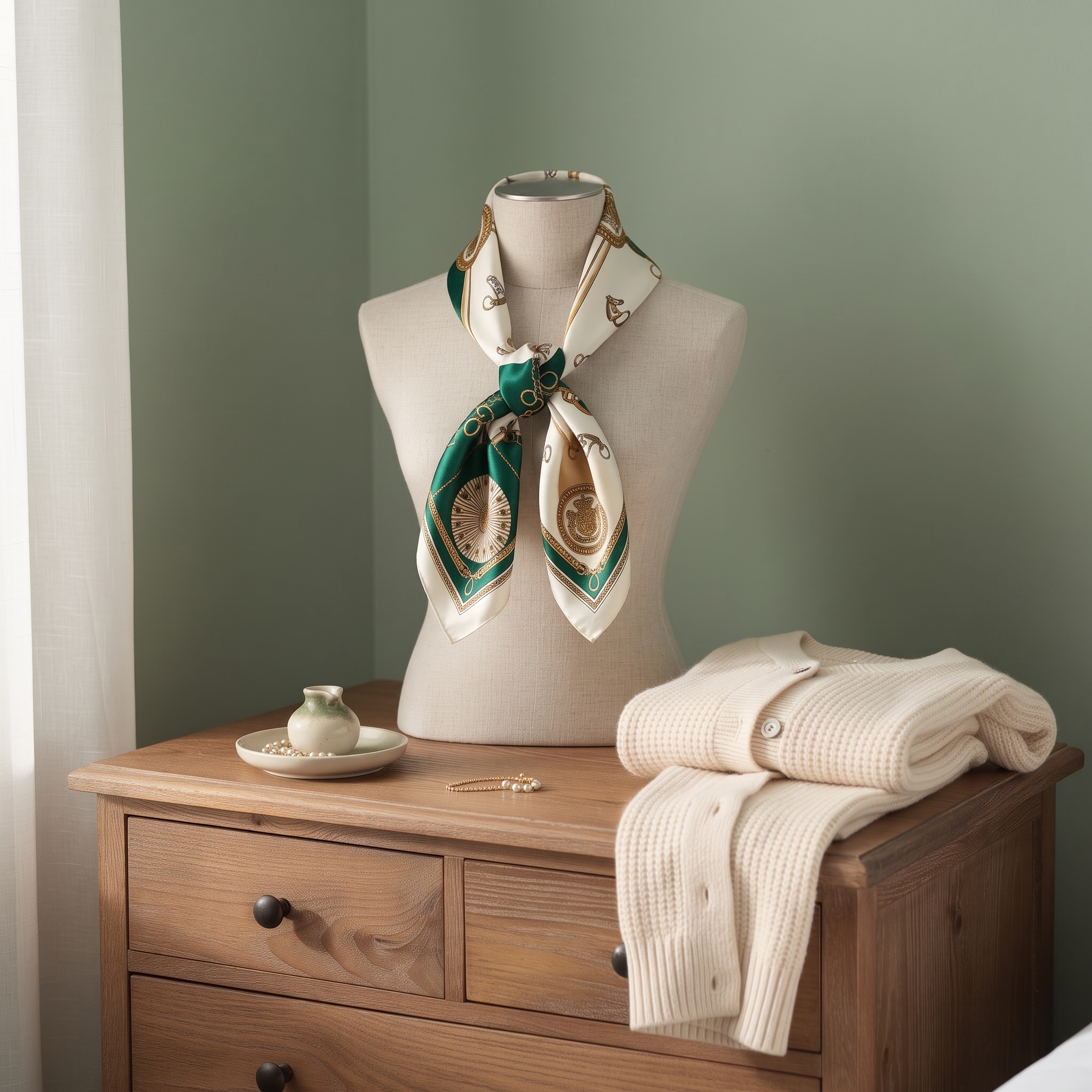
Fold the neckerchief to a narrow band, tie it twice instead of once, and tuck the ends under the band. That is the method that stays put all day. A single loose knot on smooth satin will work its way open by lunchtime; the double knot and the tuck are what stop it. The rest of this post explains why knots slip, how to fold and tie each version, and what to do when a knot still will not hold.
Why does a neckerchief knot slip?
Two things work against you. The first is the fabric. Our neckerchief is silk-feel polyester satin, 70 by 70 cm, $18 in nine prints — and satin is smooth by design. Smooth fabric has less grip than cotton or wool, so a knot tied in it loosens more easily. That is not a fault in the scarf; it is the price of the shine. The second is weight: a wide, unfolded square hangs heavy on the knot and pulls it open as you move. A narrow band has less weight pulling on it, which is why folding first matters as much as tying.
Size helps here too. At 70 cm, a neckerchief is smaller than a full square scarf, so there is less fabric to fight with and shorter ends to manage. That is the point of the size — it is made to be tied, at the neck, in hair, on a wrist or on a bag handle. It will not wrap your shoulders and it is not a full head covering; if you want that drape, look at the 90 cm squares instead, which are covered in how do you wear a square scarf and in 70, 90 or 180cm — which scarf size do I actually need.
How do you fold it first?
Start flat. Fold the square diagonally into a triangle, then roll or fold it from the long edge toward the point until you have a band about as wide as two fingers. Keep the band flat and even — a band that is thick in the middle and thin at the ends will knot unevenly and slip on the thin side.
The width of the band is a choice, not a rule. A narrower band makes a smaller, neater knot and holds better, because there is less bulk for the knot to work around. A wider band makes a softer, more visible knot. If staying put is the priority, go narrower. You can always loosen the band later in the day; you cannot easily re-tie a knot that has already come undone in the middle of an event.
Which knot stays put?
The knot that holds is a double overhand knot, tied at the front or slightly to the side of the neck. Put the band around your neck with the ends even at the front. Cross one end over the other and pull it through, as you would for a first shoelace knot. Then — and this is the step most people skip — tie it a second time, the same way, before you adjust anything. The second knot locks the first one. Pull both knots snug, but not tight: you should be able to slide two fingers under the band comfortably. A knot pulled too tight will creep loose as the fabric relaxes, and it will feel uncomfortable within the hour.
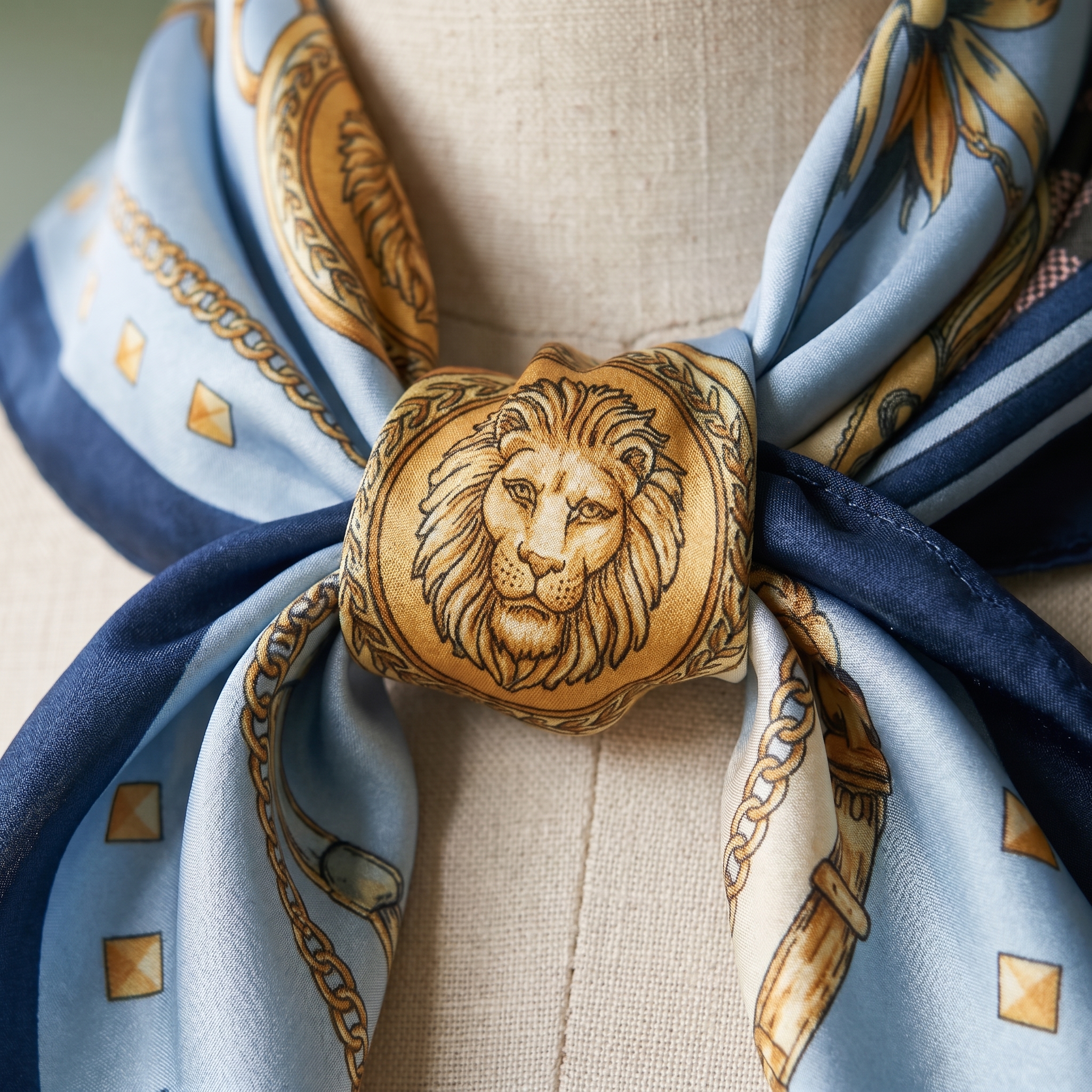
Once the double knot is tied, tuck the ends. Short ends tuck under the band on either side of the knot; longer ends can be tucked behind the band at the back of the neck, or left hanging if they are short enough not to swing. Tucking matters because loose ends catch on collars, bag straps and coat lapels, and every catch tugs the knot a little looser. A tucked knot is a knot that is not being pulled at all day.
A side knot is worth trying if a front knot keeps bothering you. Tie the same double knot slightly to one side of the neck, off-centre, and tuck the ends the same way. The knot sits where it is less likely to be knocked by a bag strap or a coat collar, and it reads as a deliberate style choice rather than a knot that drifted. If you wear a button-down shirt, put the neckerchief on first and the shirt collar over it, so the collar holds the band in place rather than pushing against it.
What if it still slips?
If a double knot and a tuck still will not hold, add a pin — discreetly, on the underside of the knot, where it cannot be seen. A small safety pin through the underside of the knot and the band behind it stops the knot working open without changing how it looks from the front. This is the honest fix for very smooth satin on a long day, and it is better than re-tying every hour.
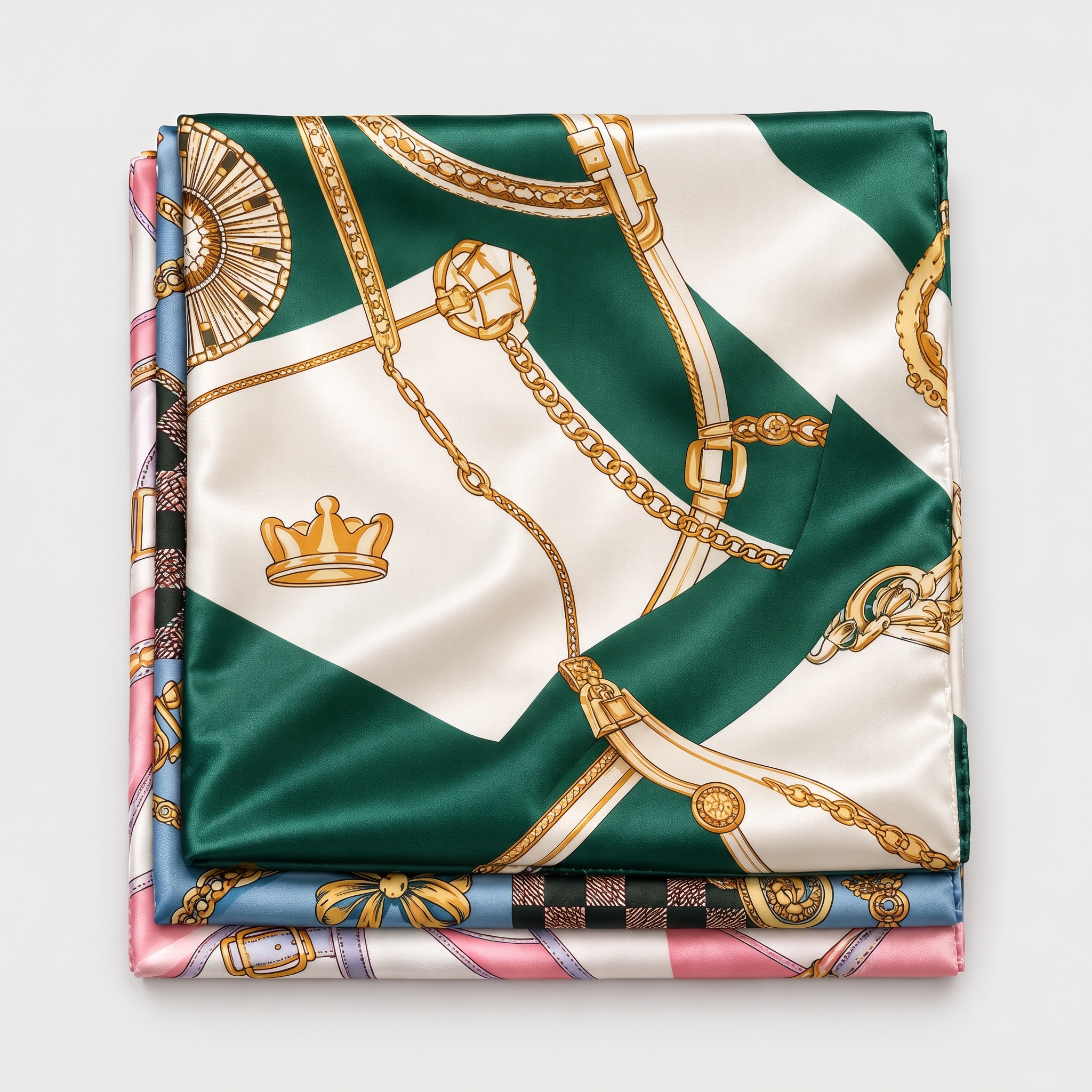
Two other checks are worth making before you blame the knot. First, check the band: if it was folded unevenly, re-fold it flat and try again, because an uneven band is the most common reason a good knot fails. Second, check the length: if the ends are very short after tying, there is not enough fabric for the second knot to grip, and a slightly wider fold — leaving longer ends — will hold better than a narrow band tied too short.
How do you keep it in place in hair or on a bag?
In hair, the same rules apply with one addition: anchor it. Loop the band through a ponytail or around a bun, tie the double knot, and add two small grips at the sides where the band meets the hair. The grips do the holding; the knot does the looking. Without them, a satin band on smooth hair will slide within the hour, however well it is tied.
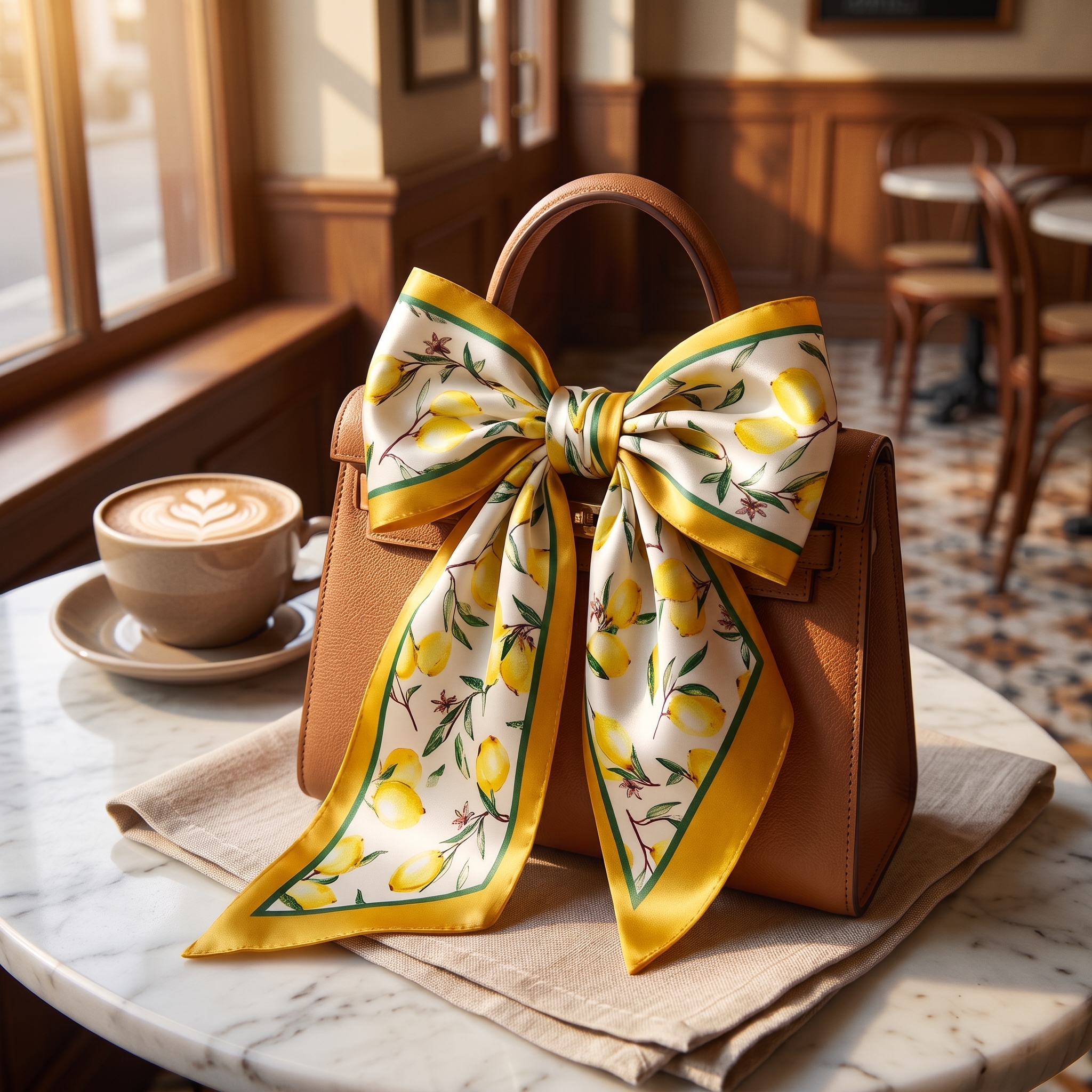
On a bag handle, tie the bow or knot twice as well. A single bow on a bag handle loosens every time the bag is picked up and put down, because the handle moves. A double knot, with the ends tucked or trimmed to an even length, stays put through a day of carrying. The same applies to a wrist wrap: wrap it flat, tie it twice, and tuck the ends under the wrap.
The short version
A neckerchief knot stays put when you fold the square to a flat, narrow band, tie a double overhand knot instead of a single one, and tuck the ends under the band so nothing tugs at it. If it still slips, pin the underside of the knot discreetly, re-fold the band flat, or move the knot to the side. Our neckerchief is 70 by 70 cm, silk-feel polyester satin, $18 in nine prints — small enough to tie neatly, smooth enough that the double knot and the tuck are worth doing properly.